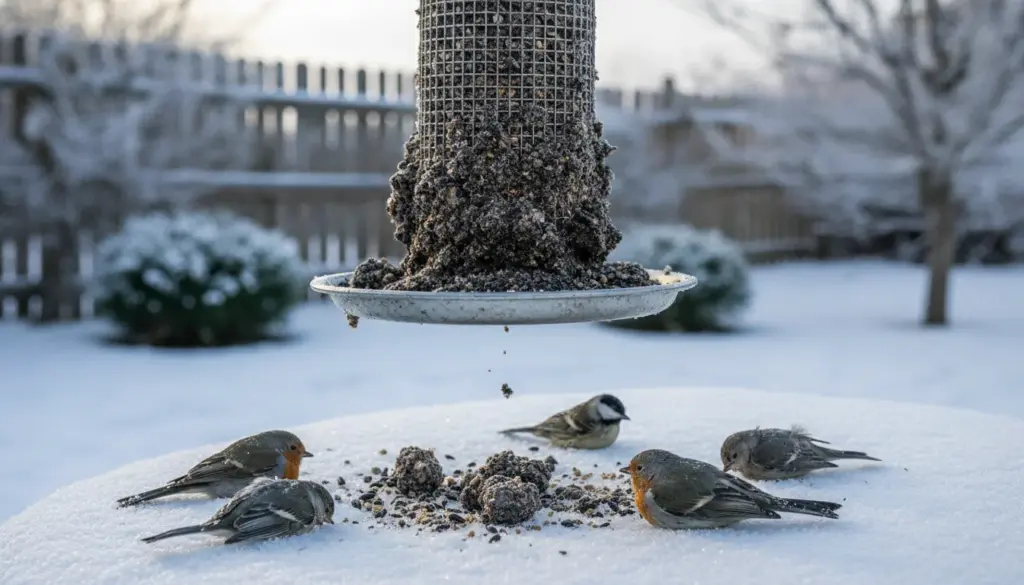
Spotting a flurry of robins, finches, and chickadees around your backyard feeder on a freezing winter morning is a rewarding sight. Naturally, you might want to pile the food high to keep these visiting flocks well-nourished. However, many well-meaning nature enthusiasts overlook a crucial detail that can actually harm local wildlife. Allowing your bird mix to become damp or soaked by rain completely transforms a helpful gesture into a severe health risk for our feathered friends.
Why Overflowing Bird Feeders Spell Trouble in Winter
Filling your outdoor dispensers to the absolute brim feels incredibly convenient when the temperature drops. It creates the illusion that your backyard visitors are stocked up for the week, saving you from daily trips into the freezing cold. Unfortunately, dumping massive quantities of food outdoors simply gives the kernels ample time to absorb atmospheric moisture.
Persistent drizzle, thick morning fog, frost, and sleet gradually saturate the grain mixture. As peanuts, sunflower seeds, and other treats lose their crispness, they simultaneously bleed away vital nutritional value. Birds desperately rely on this high-energy fuel to regulate their internal body temperature during freezing nights.
What looks like a generous banquet may actually be a soggy, depleted, and highly unhealthy paste offering zero real sustenance. Once the outer shell of the kernel becomes slightly clammy, the internal degradation speeds up rapidly. While the surface might appear perfectly fine, harmful microorganisms secretly begin to thrive deep within the damp layers.
The Hidden Threat of Fungal and Bacterial Infections
Soggy grain provides the ultimate breeding ground for deadly pathogens, including Aspergillus fungi and various harmful bacteria. When stuffed into semi-enclosed wooden houses lacking proper drainage or adequate airflow, these microscopic invaders multiply at an alarming rate.
Salmonella stands out as one of the most notorious culprits affecting wild bird populations. This aggressive bacteria spreads effortlessly through contaminated feeding stations and mixed droppings. If a creature is already struggling with the bitter cold, consuming a tainted meal will often deliver a fatal blow.
Recognize the warning signs of infected backyard birds:
- Severe gastrointestinal distress, often visible as watery or highly unusual droppings.
- Lethargic movements and sitting huddled up with puffed-out feathers.
- Noticeable reluctance to fly, with individuals lingering awkwardly on the ground or hiding deep in bushes.
- Rapid outbreak transmission among flocking species, particularly sparrows and finches.
A single unsanitary feeding zone holds the potential to devastate an entire local flock exactly when they need supplemental calories the most.
Fungal spores introduce an entirely different, yet equally lethal, hazard. Specific fungal strains naturally produce potent poisons known as mycotoxins. Because songbirds weigh just a few grams, even a microscopic trace of these toxins causes catastrophic damage to their delicate nervous systems and internal organs.
Frozen Seed Blocks Drain Crucial Energy Reserves
Allowing moisture into your grain supply introduces a secondary crisis the moment temperatures plummet below freezing. That once-loose pile of nutritious seeds rapidly turns into an impenetrable, icy concrete block.
Small visitors like greenfinches and titmice must exert an incredible amount of physical effort to chip away at this solid mass. Every frustrating peck at a stuck kernel burns through precious calories. These are the exact same calories they desperately require to survive the harsh winter nights.
While a frozen mound of food might look perfectly edible from a distance, it forces wildlife to exhaust their final energy reserves for virtually zero nutritional reward. This creates a heartbreaking double trap: animals face severe disease risks while simultaneously starving due to physically inaccessible nourishment.
Choosing Proper Equipment and Smart Portion Control
Making a few strategic adjustments dramatically reduces the chances of ruining your outdoor bird buffet. The solution begins with selecting the correct dispensing equipment.
Always prioritize excellent water drainage when evaluating a new system. A base made of fine wire mesh, or a tray featuring strategically placed weep holes, ensures standing water drains away immediately. Think of it exactly like a potted houseplant: without proper drainage, everything sitting inside simply suffocates and rots.
Daily micro-dosing is significantly safer than weekly bulk-feeding. By limiting how long the food sits outside, you drastically slash the odds of spoilage. Wildlife experts consistently recommend serving morning portions that the local flock can entirely consume before sunset.
Delivering fresh, manageable scoops every morning guarantees the supply stays perfectly dry while providing exactly what the animals need without any messy leftovers. If you absolutely must use a set-and-forget method, opt for a heavily sheltered, weather-proof tube silo rather than an exposed, flat platform.
Strict Hygiene Routines Literally Save Avian Lives
Any popular backyard gathering spot hosting dozens of hungry visitors will inevitably become a hotspot for germ transmission. Consequently, rigorous sanitization must become a non-negotiable part of your winter caregiving routine.
Essential steps for maintaining a sanitary feeding station:
- Physically inspect the remaining supply after every heavy snowfall or rainstorm to verify dryness.
- Immediately discard any mixture that clumps together, smells distinctly musty, or shows visible fuzzy growth.
- Scrub all houses and tube dispensers weekly using hot water mixed with a generous splash of natural white vinegar.
- Allow every single component to air-dry completely before reintroducing fresh kernels.
- Periodically rotate the location of your dispensers to prevent the soil underneath from turning into a highly infectious mud pit.
Pay close attention to the immediate environment directly beneath your hanging stations. Accumulating droppings mixed with decaying husks quickly elevate contamination risks, especially for ground-foraging species like sparrows and chaffinches.
Selecting the Most Nutritious Winter Provisions
Preventing moisture is only half the battle; serving the correct menu plays an equally vital role in avian health. High-fat products carry wildlife safely through the bitterest nights, provided the stock remains pristine and crisp.
Top-tier winter menu choices include:
- Black oil sunflower seeds, which boast an incredibly high fat content loved by most species.
- Unsalted, unroasted peanuts specifically graded for birds, ideally served inside a dedicated mesh silo.
- Premium fat balls removed from their dangerous plastic mesh netting and placed in proper metal holders.
- High-quality, dust-free seed blends that contain absolutely zero breadcrumbs or cheap filler grains.
Avoid tossing out stale bread, salted cocktail nuts, or random kitchen scraps. These human foods lack essential nutritional profiles, frequently contain dangerous sodium levels, and morph into a toxic paste almost instantly upon contact with morning dew.
Transforming Your Yard into a Safe Winter Haven
Creating a secure sanctuary requires more than just offering top-tier snacks and practicing good hygiene. The surrounding landscape architecture makes a massive difference. Dense hedges, thick shrubs, and climbing vines offer critical shelter where small creatures can rest safely or quickly hide from passing predators.
To take your wildlife support to the next level, consider cultivating native shrubs that naturally bear fruit during the colder months. Plants like holly, firethorn, and snowberry offer reliable, natural food sources that will never spoil in the rain. This brilliant landscaping strategy reduces the intense crowding pressure on your artificial dispensers.
Finally, carefully manage their hydration needs during deep freezes. Offering a shallow dish of lukewarm water provides life-saving hydration when natural puddles ice over. Just remember to remove the basin before the water fully solidifies, preventing a slick, dangerous surface where fragile claws might slip or freeze in place.
By tweaking your equipment, adjusting your daily portion sizes, and sticking to a strict cleaning schedule, your property will transform into a highly beneficial winter refuge. Prioritizing dry provisions and remaining vigilant against frost guarantees your well-intentioned generosity offers genuine, life-saving support during the harshest months of the year.