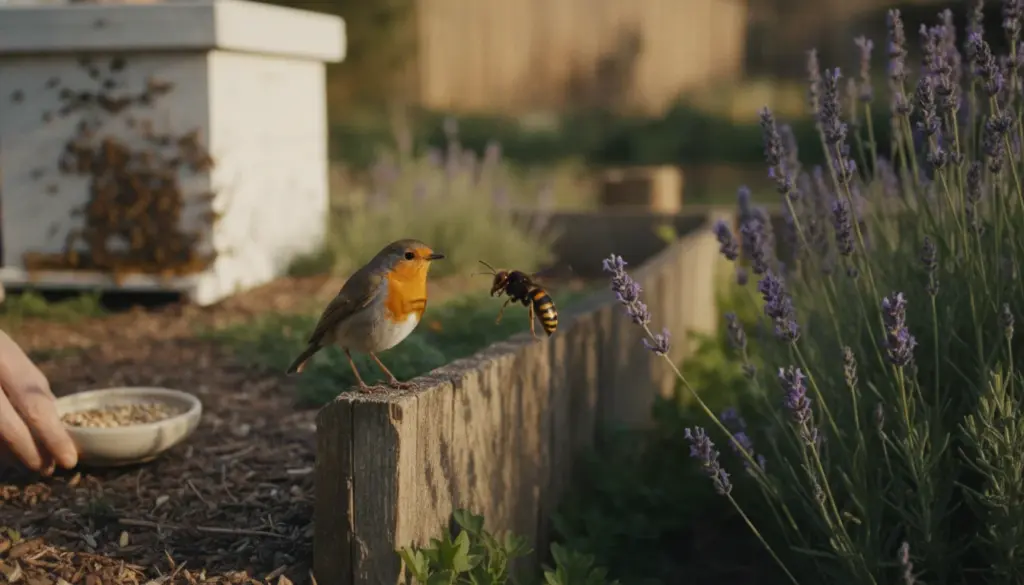
An Unexpected Guardian for Local Pollinators
Beekeepers and gardening enthusiasts are growing increasingly concerned about an aggressive invasive predator decimating local bee populations. Yet, an unexpected defense mechanism might already be fluttering around your backyard. By setting up your outdoor space strategically, a cheerful little songbird can become a vital ally against the Asian hornet starting as early as March.
The Rapid Rise of a Voracious Predator
Accidentally introduced to Europe roughly two decades ago, the Asian hornet has rapidly expanded its territory across the continent. This formidable wasp specifically targets honeybees and essential pollinators, ambushing them near hives, blossoming trees, and patio spaces.
An established colony can easily devour up to 11 kilograms of insects annually. Because a massive portion of this diet consists of bumblebees and other beneficial bugs, apiarists suffer heavy losses while local fruit orchards face severe pollination drops.
Controlling this invasive pest has proven incredibly difficult. The insects reproduce at an alarming rate, construct massive nests high up in tree canopies or on structures, and face almost no natural predators in our region. Consequently, total eradication is highly unlikely. Waiting until mid-summer to tackle the problem is simply too late. The true window of opportunity opens during the first mild weeks of the year.
Why Early Spring is the Ultimate Battleground
As winter thaws, surviving queens emerge from their dormant state. Throughout March and April, these solitary insects seek out quiet spots to establish a primary nest, often choosing garden sheds, tree hollows, or sheltered roof edges.
If a queen manages to rear her first generation of workers without interruption, the colony will explode into thousands of individuals within just a few months. Once that happens, intervention becomes exceptionally challenging and hazardous due to the swarm’s aggressive defensive behavior.
This initial nesting phase, characterized by a tiny structure and minimal workers, represents the absolute weakest point in the hornet’s life cycle. Coincidentally, this exact timeframe aligns perfectly with the intense foraging period of titmice, who are desperately hunting for protein-rich grubs and soft insects to feed their newly hatched young.
Small Birds, Massive Impact
Familiar backyard visitors like the blue tit, great tit, and coal tit might look completely harmless, but during breeding season, they transform into relentless insect hunters. A single pair of these diligent birds can make hundreds of feeding trips every single day. Over a few short weeks, they consume thousands of caterpillars, grubs, and tiny bugs. When an embryonic Asian hornet nest is nearby, those plump larvae simply become part of the daily avian buffet.
The great tit, in particular, exhibits a fascinating habit of nesting relatively close to wasp or hornet colonies. These clever foragers take advantage of dead insects and exposed larvae scattered around the hive, especially if the hornet colony begins to weaken later in the season.
While backyard birds will never single-handedly solve the invasive hornet crisis, they provide relentless natural suppression. They primarily snatch up easily accessible larvae and scavenge abandoned nest debris, which organically reduces the number of successful new queens.
Transforming Your Garden into a Hunter’s Haven
To actively recruit these feathered pest controllers, early preparation is essential. The groundwork should be laid during late winter and early spring.
1. Mount the Right Nesting Box Early
By March, local cavity-nesting birds are already competing fiercely for limited real estate. Providing a high-quality birdhouse can make all the difference. Keep these specific parameters in mind:
- Material choices: Stick to untreated wood that is roughly 1.5 to 2 centimeters thick.
- Entry hole size: Aim for a diameter of 2.5 to 3 centimeters to perfectly accommodate blue and great tits.
- Safe elevation: Mount the box between 2 and 5 meters off the ground to prevent feline attacks.
- Strategic placement: Choose a quiet spot protected from intense midday heat and prevailing winds.
- Perfect timing: Ensure everything is securely hung before the middle of March.
A well-placed box has an excellent chance of attracting residents in its very first season. Just avoid overcrowding; a standard yard only needs one or two strategically spaced boxes to prevent territorial disputes.
2. Adjust Your Feeding Schedule
During harsh or damp winters, providing suet balls and seeds is a wonderful way to help wildlife survive lean months. However, when spring arrives, your feeding strategy must change.
Continuing to offer peanuts and fat blocks too late into the season discourages tits from actively hunting live prey. If you want them clearing out Asian hornet larvae and other garden pests, you need to encourage them to forage naturally.
3. Cultivate an Insect-Friendly Habitat
A vibrant, living landscape naturally draws in more insectivorous birds. Focus on planting specific shrubs and trees that harbor native bugs. Excellent choices include:
- Viburnum, hawthorn, blackthorn, and rowan trees.
- Elderberry bushes, hazel, and European spindle.
- Mature fruit trees featuring rough bark and natural crevices.
Allow patches of your lawn to grow wild, maintain a dedicated messy corner with fallen branches, and avoid over-pruning. These deliberately untidy zones become thriving ecosystems packed with hiding spots, nesting materials, and essential insect life.
4. Provide Fresh Water and Absolute Peace
A shallow dish or tiny pond filled with clean water attracts not only thirsty birds but also beneficial insects like dragonflies. Routinely refresh the basin to prevent mosquitoes from breeding or diseases from spreading.
Once a birdhouse is occupied, maintain your distance. Resist the urge to peek inside the lid or relocate the box during active breeding. Titmice are legally protected, and any human-induced stress can easily cause the parents to abandon their clutch entirely.
A Dual Offensive: Nature and Professional Intervention
Even with a yard heavily patrolled by hungry tits, the Asian hornet remains a formidable ecological threat. While your backyard allies will enthusiastically pick off accessible larvae and scavenge, a fully established, active colony requires specialized intervention.
If you spot a suspiciously massive nest or notice intense hornet traffic around your property or apiary, contacting a pest control professional is the safest course of action. Most local municipalities and regional wildlife authorities maintain specific reporting protocols for this invasive predator.
The most effective defense relies on a dual approach: expert eradication of mature hives combined with a yard optimized to support birds and other predatory insects year-round. By reporting sightings promptly, you prevent a minor nest from developing into a massive super-colony. Meanwhile, your resident insectivores will maintain constant pressure on newly forming nests and the broader local population.
The Broader Benefits of a Wild Bird Population
While suppressing the Asian hornet is incredibly beneficial, cultivating a robust local bird population offers remarkable secondary advantages. Titmice devour massive quantities of destructive pests, including box tree caterpillars, winter moth larvae, aphids, and small beetles. Gardeners routinely observe far less foliage damage on their ornamental plants once local birds begin actively raising their broods.
Furthermore, welcoming wildlife adds immense joy to a property. The energetic bickering near a birdhouse, the frantic feeding runs, and the sudden alarm calls inject vibrant life into your outdoor space. It creates a perfect, hands-on learning environment for children to understand predator-prey dynamics and the crucial role ordinary creatures play in our immediate ecosystem.
For those wanting to maximize their impact, consider developing a comprehensive nature plan for your property. Blending secure nesting sites, native flowering plants, decaying woodpiles, and reliable water sources creates a resilient micro-ecosystem. This thoughtful approach not only fortifies your garden against invasive exotics but also creates a welcoming haven for hedgehogs, ladybugs, hoverflies, and butterflies.
Ultimately, while the Asian hornet may never completely vanish from our landscape, it will face significantly steeper resistance. A few wooden planks, some strategically planted shrubs, and a willingness to let nature be a little wild can provide surprisingly powerful protection for our indispensable pollinators.