The Hidden Reptile Magnet in Your Backyard
As temperatures begin to rise, our outdoor spaces spring back to life. Unfortunately, this seasonal awakening also applies to reptiles. Many homeowners are surprised to encounter slithering visitors right outside their doors during the spring months.
It turns out that one incredibly common piece of outdoor equipment creates a flawless, heated sanctuary for these creatures. Without realizing it, you might be offering them a five-star accommodation.
Springtime: A Crucial Warming Period
Starting around March, reptiles slowly emerge from their winter dormancy. After weeks of complete inactivity, they need to jumpstart their metabolisms. Because they are cold-blooded, they cannot generate their own body heat and must rely entirely on their surroundings to warm up.
Most species thrive when the environment hits that sweet spot between 25 and 30 degrees Celsius. They actively seek out areas that absorb sunlight throughout the day while still offering plenty of camouflage.
You will typically find them resting in these classic spots:
- Overgrown grass boundaries and neglected lawn edges
- Dense, low-hanging shrubs and thick hedges
- Piles of decaying yard waste or stacked firewood
- Retaining walls made of loose bricks or natural stone
- Cluttered corners filled with leftover building materials
Across Europe, thousands of snakebites are reported annually, heavily involving viper species. These defensive strikes usually happen when a gardener blindly reaches into a leafy corner, shifts a pile of wood, or works in tall grass without checking first.
Why Your Watering Equipment is Uniquely Attractive
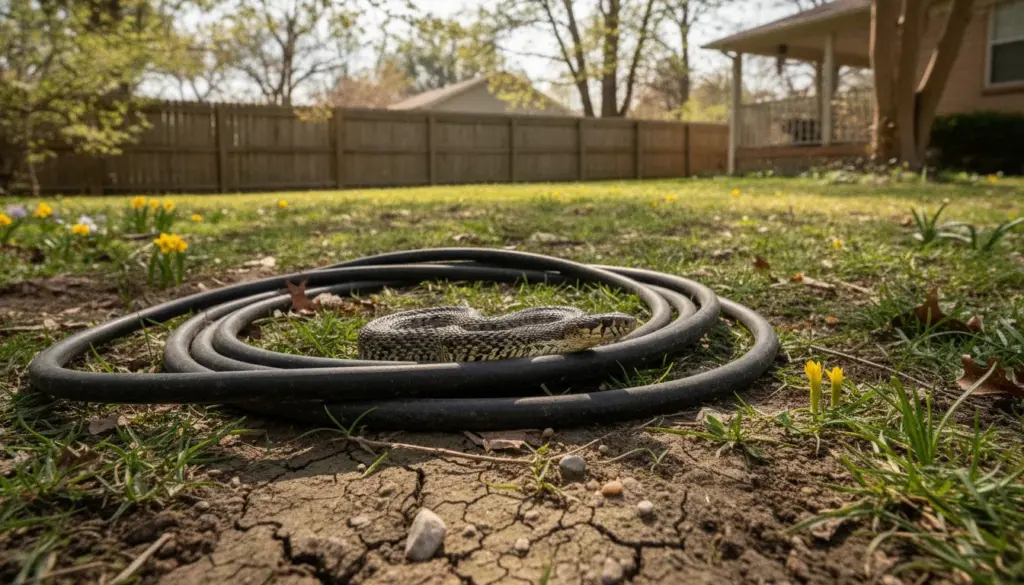
A plastic or rubber tube left coiled in the afternoon sun is practically irresistible to a cold reptile. Whether it is sitting directly on the grass in loose loops or wrapped around a low-standing caddy, it offers exactly what these animals crave.
The perfect microclimate is created almost instantly. The synthetic casing absorbs solar radiation rapidly and traps that thermal energy for hours. Additionally, any residual water left inside from recent watering creates a warm, highly humid environment right at ground level.
This setup provides several distinct survival advantages:
- Thermal retention: The material stays warm long after the sun dips behind the clouds.
- Security: The tight circular windings provide a protective barrier against predators.
- Ground stability: Being close to the earth ensures the ambient temperature remains steady.
- Undisturbed peace: Homeowners often leave these tools untouched on the lawn for days at a time.
Because they are entirely dependent on external heat sources, a seemingly innocent coil of rubber translates to a highly engineered incubator for a wandering reptile.
Safe Handling Practices
Startling a resting animal is the quickest way to trigger a defensive bite. If you grab an occupied coil blindly, you will likely frighten the creature much more than it frightens you. Developing a quick visual routine can prevent unpleasant encounters entirely.
Adopt these simple preventative habits:
- Inspect visually: Always check the gaps between the loops before reaching down.
- Create vibrations: Gently tap the equipment with a rake or the toe of your boot to encourage any hidden guests to flee.
- Elevate your storage: Mount your equipment on a high wall bracket rather than leaving it on the patio.
- Wind it tightly: Eliminate hiding gaps by reeling everything in with no slack.
By giving wildlife a brief moment to escape, you ensure a safe outcome for everyone involved.
Other Surprising Heat Traps
Your watering gear isn’t the only thing drawing cold-blooded visitors. Any item that captures solar energy and creates a dark, sheltered gap underneath is going to act as a powerful lure.
Watch out for these common yard magnets:
- Heavy-duty construction tarps resting on the soil
- Corrugated metal roofing or flat steel plates
- Fiber cement boards and spare wooden planks
- Stacks of unused patio pavers or roof tiles
- Inverted plastic planting pots
Darker materials soak up intense morning heat and release it incredibly slowly. When placed flat against the earth, they form an insulated, pitch-black fortress. For a creature looking to raise its body temperature safely, this is an open invitation.
Smart Landscaping Adjustments
You absolutely do not need to pave over your beautiful garden to keep it safe. Making just a few strategic changes to how you store your outdoor items will drastically reduce the appeal of your property.
Keep storage in mind: Try to lean spare wooden boards vertically against a shed rather than laying them flat. Keep all tarps elevated on wooden pallets to allow airflow underneath. Minimize sprawling piles of leftover landscaping rocks, and make sure to trim back tall vegetation near your main walkways and children’s play areas.
By eliminating these artificial shelters, reptiles will naturally bypass your patio and seek out quieter, wilder environments further away from human activity.
Evaluating the Actual Threat Level
While Western Europe is home to both venomous and completely harmless species, garden encounters are overwhelmingly benign. In countries like the Netherlands, the venomous viper primarily sticks to protected nature reserves, leaving only non-venomous grass snakes to occasionally wander into residential areas.
Regardless of the species, the golden rule remains the same: keep your distance. Never attempt to capture or pin down a wild animal. If a bite does occur, the best response is to stay calm, keep the affected limb immobilized, and immediately seek professional medical evaluation.
Coexisting with Local Wildlife
Maintaining a biodiverse, nature-friendly property is still highly encouraged. You can easily support local ecosystems while keeping your primary living spaces clear.
Consider establishing “wild zones” at the far edges of your property where nature is allowed to take its course. Keep insect hotels, log piles, and brush away from your main patio. Always wear sturdy, closed-toe boots during heavy landscaping tasks rather than sandals, and teach younger family members never to blindly reach underneath heavy planks.
Understanding fundamental reptile behavior makes property management simple. They just want warmth, quiet, and a place to hide. Sometimes, achieving perfect harmony with nature is as simple as hanging your equipment neatly on the wall instead of leaving it scattered across the lawn.