Reputation versus reality: Why our expectations are often wrong
Many prospective pet owners search for a dog that learns quickly and listens flawlessly. However, a massive behavioral and genetic analysis involving tens of thousands of canines severely challenges this common assumption. Assessing roughly 48,500 dogs, researchers discovered that labeling a specific pedigree as inherently “easy to train” is largely inaccurate. These findings contradict countless online articles and social media posts that continuously praise the exact same pedigrees as ultimate champions of obedience.
Prospective puppy buyers usually have a highly specific picture in their minds. We assume a Golden Retriever will naturally want to please us, or that a Border Collie will master commands in just a few tries, while labeling terriers as endlessly stubborn. This preconceived framework heavily influences how we judge canines before they even step foot inside our homes.
If a specific pedigree boasts a stellar reputation, humans tend to view its actions through a much more forgiving lens. An overly energetic, jumping puppy from a highly favored pedigree is typically praised as eager and enthusiastic. Conversely, a puppy displaying the exact same bouncing habits from a supposedly stubborn lineage is quickly deemed difficult or unruly.
Behavioral experts point out that this is a textbook case of confirmation bias. We actively notice behaviors that align with our existing beliefs while completely ignoring evidence to the contrary. Our collective perception of highly cooperative canines stems mostly from human expectation rather than actual canine action.
The 48,500 dog study reveals a mere 9 percent behavioral difference
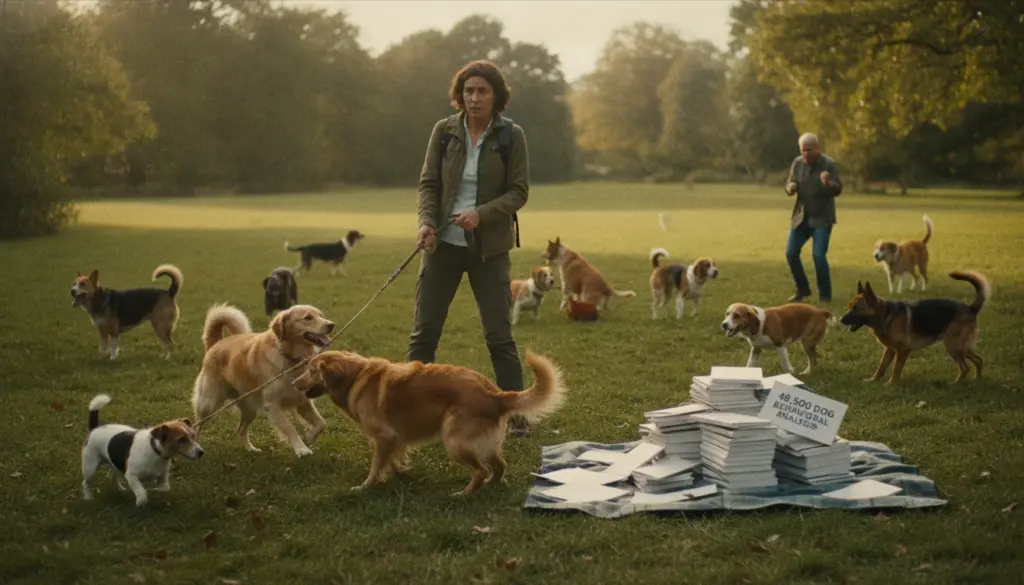
Through the Darwin’s Ark project, geneticist Elinor Karlsson and her research team evaluated data from approximately 48,500 domestic canines. Thousands of these animals underwent comprehensive DNA sequencing. Alongside this genetic mapping, caretakers completed extensive behavioral questionnaires covering traits like obedience, sociability, fearfulness, aggression, and playfulness.
The statistical breakdown painted a remarkably clear and grounded picture:
- Only about 9 percent of behavioral variation between individuals could actually be linked to their specific pedigree or genetic lineage.
- Differences in personality within a single pedigree were frequently much wider than the behavioral gaps between entirely different types of dogs.
- Mixed-breed animals possessing a stereotypically “well-behaved” ancestor in their lineage were not noticeably easier to manage or train.
This data certainly doesn’t imply that genetics are completely irrelevant. It does, however, prove that lineage is a dramatically smaller piece of the puzzle than registry clubs often suggest. The notion that acquiring a specific type of puppy automatically guarantees an ideal family pet is fundamentally flawed.
Why ‘most obedient breed’ rankings are heavily misleading
Commercial pet websites love publishing definitive lists ranking the smartest or most compliant canines. These articles predictably feature the Labrador Retriever, Golden Retriever, Poodle, German Shepherd, and Border Collie. Because these animals have historical roots as herders, hunters, or working partners, the narrative insists they are biologically hardwired to seamlessly cooperate with humans.
Relying on these internet rankings introduces two distinct problems. First, a lineage profile only offers a very rough statistical probability, rather than a crystal-clear forecast of your specific animal’s future actions.
Furthermore, modern breeding practices have shifted heavily toward physical aesthetics. Breeders actively select for coat color, overall size, head shape, and tail carriage. Complex psychological traits, like the willingness to collaborate with humans, stem from an intricate web of hundreds of genes combined with critical early life experiences. You simply cannot neatly package that complexity into a single descriptive label.
Shifting focus from pedigree to the individual animal
Leading canine behaviorists urge future owners to stop fixating on labels and start evaluating the actual animal standing in front of them. A dog’s true capacity for learning emerges from a delicate dance between their biological foundation and the environment shaping them. A few foundational pillars are especially crucial:
- Comprehensive early socialization: How extensively was the puppy exposed to diverse people, varied noises, other animals, and novel environments?
- Consistent household rules: Does the animal receive clear, unchanging boundaries and predictable rewards for good choices?
- Adequate mental and physical outlets: Do the daily activities actually match the animal’s natural energy levels and cognitive needs?
- A stable emotional climate: Canines are highly sensitive creatures that quickly absorb household tension, loud arguments, and erratic daily routines.
Even two littermates sharing nearly identical DNA can develop into entirely different adults if placed in contrasting homes. One might mature into a wonderfully relaxed companion, while the other develops severe anxiety or hyperactivity based entirely on their upbringing.
Crucial traits to look for when seeking an ‘easy’ companion
If you want an animal that seamlessly integrates into your daily life, you need to look far beyond the paperwork during a meet-and-greet. Practical, on-the-spot observations are far more valuable. Consider these essential focal points:
- Does the animal approach strangers with relaxed curiosity, or do they immediately shrink back and hide?
- Are they capable of holding their focus on a toy or a person, even for just a few fleeting seconds?
- How quickly do they recover after being startled by an unexpected noise or a sudden movement?
- Do they naturally seek out physical affection, or do they seem to prefer maintaining a bubble of personal space?
Evaluating these exact responses provides a much more accurate window into your future relationship than reading a glamorous brochure about the perfect family pet.
What these behavioral findings mean for shelters and breeders
Animal rescues and shelter organizations can view this comprehensive data as a massive validation of their daily work. Staff members routinely witness mixed-breed animals integrating into family homes just as beautifully—and occasionally better—than purebreds. When adoption counselors match families based on energy levels, lifestyle habits, and individual personality rather than a requested label, the success rates for permanent placements skyrocket.
Responsible breeders can also refine their educational approaches using this data. Instead of utilizing the standard “easy to train” sales pitch, they can highlight the natural variation within their own litters. Emphasizing the critical role of puppy socialization and ensuring a buyer’s actual lifestyle matches the individual puppy’s temperament leads to much healthier outcomes.
Embracing an open mind about character over lineage maximizes your chances of finding a truly compatible best friend, drastically reducing the heartbreaking likelihood of a pet being surrendered later on.
Diving deeper: Genetics, upbringing, and persistent canine myths
From a biological standpoint, canine behavior is considered a highly complex trait. Science confirms there is no singular “obedience gene” waiting to be unlocked. Instead, thousands of different genetic markers each exert a tiny influence, while early developmental experiences leave a massive, permanent imprint on the developing brain.
This explains exactly why a puppy born from an elite working lineage can easily develop into an insecure, disobedient adult if they suffer from poor socialization and a lack of structured guidance. Conversely, a completely unknown mix from the local pound can blossom into an incredibly reliable, well-mannered companion through patient training and a deeply stable home environment.
Despite this overwhelming evidence, pedigree myths refuse to fade away. Movies, television commercials, and viral videos continually typecast specific dogs as the ultimate child-friendly guardian, the brilliant detective, or the flawless urban companion. Buyers influenced by these media portrayals step into ownership carrying heavy biases, which ultimately dictates how much patience, training, and understanding they extend to the animal.
Anyone contemplating bringing a furry companion into their life will benefit immensely from taking a broader perspective. Pay close attention to the actual behaviors the animal displays right now. Ask detailed questions about their early history, and take a completely honest inventory of your own available time, patience, and handling experience. While genetic history might offer a very vague starting point, it ultimately reveals almost nothing about how peacefully that dog will snooze beside your couch, walk down your busy street, or bond with your family.