During my younger years, a captivating narrative by Hermann Hesse left a profound impact on my perspective. I want to share it with you to illustrate a simple truth: even when poets seem to converse only with themselves, kindred spirits are always listening.
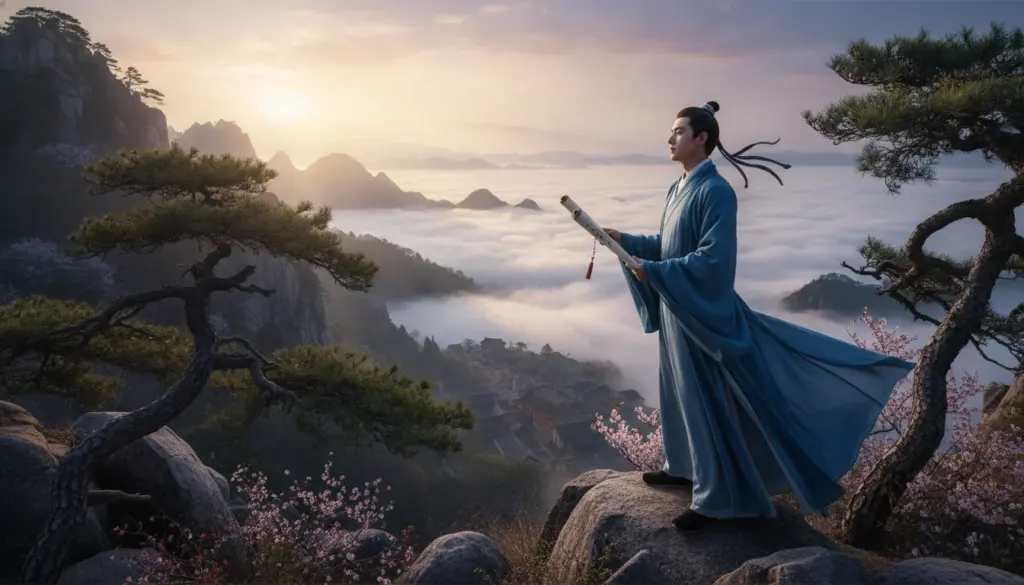
Long before I ever entertained the thought of becoming a writer, I stumbled upon a short story by this brilliant German-born, naturalized Swiss author and Nobel laureate. The tale revolves around Li Han Foo, a young man from China who harbored a singular, burning desire in his youth: to transform into a master of poetry.
Residing in his homeland near a gentle river, he found himself engaged to a stunning woman from a respectable family. This union was entirely his choice, fully backed by his delighted parents. At just twenty years old, Li was a slender, humble individual known for his gentle demeanor.
Despite his tender age, local literary circles already recognized his talent due to a few exceptional verses he had penned. His fiancée possessed both extraordinary beauty and deep virtue. To the outside world, their happiness appeared absolutely complete. Yet, deep down, he lacked true fulfillment. Achieving ultimate joy meant he needed to reach absolute perfection in his craft. Then, an unexpected event changed everything.
As twilight descended one evening, a vibrant celebration was underway at his riverside home. Floating along the water’s edge in a small boat, the aspiring poet watched the reflections of lavishly dressed guests laughing and mingling. Above all, he was captivated by the breathtakingly clear, azure night sky.
His heart raced as he absorbed the surrounding splendor. Even though duty called him back across the water to join his beloved and their friends, a deeper yearning took hold. He desperately wanted to capture this fleeting beauty and distill it into a flawless poem.
The Mysterious Voice of a Stranger
Suddenly, caught in a hazy space between waking and dreaming, a soft sound broke the silence. A distinguished elderly man appeared before him. Rising quickly, Li greeted the venerable figure with utmost respect.
The old man simply smiled and began reciting verses of unfathomable beauty. Astounded, the young poet cried out, asking the stranger’s identity and how he could possibly weave such magnificent words.
The mysterious visitor offered a simple proposition. He told the youth that if he truly wished to master poetry, he must seek him out. The elder revealed that his cabin sat at the source of the great river, nestled in the northwestern mountains, and introduced himself simply as “The Master.”
As quickly as he arrived, the old man vanished. After a brief, frantic search, Li convinced himself that exhaustion had triggered a vivid hallucination. He rushed back to the party, but amidst the shallow chatter, that enigmatic voice echoed relentlessly in his mind.
Merely a few days passed before Li’s father decided to gather their loved ones to finalize the wedding dates. Pleading for understanding, the son apologized for his sudden reluctance. He explained his driving ambition to master poetry, asking for time alone to strictly focus on his studies.
Concerned, his father wondered if a lover’s quarrel had sparked this sudden shift, offering his help to resolve any romantic disputes. Li assured his father that his affections for his fiancée remained entirely unchanged. Instead, he confessed the story of the ethereal master who had visited him during the riverside festival, expressing a profound need to become his apprentice.
Displaying remarkable patience, his father granted him a single year to chase this artistic dream. Hesitant, the young man admitted that such mastery could take many years, as true art operates on an unpredictable timeline.
Walking the Poet’s Path
With a heavy heart, the father watched his son depart. After penning a heartfelt farewell letter to his bride-to-be, the ambitious youth began his arduous trek. Following a lengthy, grueling journey, he finally reached the river’s mountainous source.
There, standing amidst sheer isolation, was a fragile bamboo hut. Just as before, the elder sat outside on a simple mat, gently plucking a lute. Acknowledging Li’s respectful approach with a silent smile, the Master uttered no words and simply returned to his melodic instrument.
Rooted to the spot by the enchanting music, the young traveler fell into a state of blissful wonder, instantly forgetting his past existence. A full year went by, during which Li nearly perfected the lute. However, the delicate art of poetry began to feel increasingly difficult and immensely complex.
As his second year away concluded, an intense wave of homesickness washed over him. He deeply missed his family and his fiancée. When he tearfully requested permission to leave, the wise elder reminded him that he was always entirely free to wander wherever he pleased.
Embracing his newfound freedom, Li retraced his steps until the familiar skyline of his hometown emerged at dawn. Moving silently, he slipped into his childhood garden and paused by a window to listen to his father’s steady, sleeping breaths.
Next, he stealthily navigated to his fiancée’s neighboring estate. By climbing a tall pear tree, he caught a glimpse of her softly brushing her hair in her bedroom. In that quiet moment, he carefully contrasted this stark reality with the idealized memories he had endlessly romanticized while miles away.
A profound realization suddenly struck him. The sheer grace and aesthetic brilliance found within a poet’s imagination are impossible to replicate in the physical world. Fleeing from the garden, he turned his back on his childhood town forever.
After several days of relentless marching, he ascended back into the remote mountains. Exactly as before, the ancient Master sat peacefully on his modest mat, lost in the music of his lute. The aspiring artist never returned home, completely abandoning his former life and his promised bride.
As decades drifted by, this dedicated pupil evolved into the most celebrated and highly esteemed literary figure in his entire nation. More importantly, he achieved a state of absolute, unshakeable contentment.
This deeply moving narrative from Hermann Hesse has stayed with me since my teenage years. Decades later, reflecting on this tale of sacrifice and artistic pursuit inspired me to draft a poignant aphorism: Material wealth remains the most insignificant treasure of all.