Ever wondered how affluent Romans illuminated their opulent villas long before affordable glass was invented? The answer lies buried deep beneath the Spanish province of Cuenca. Researchers have uncovered a staggering subterranean network stretching more than 30 kilometers. Unearthing this colossal labyrinth helps us understand exactly how ancient engineering and rare Iberian resources fueled a mighty empire.
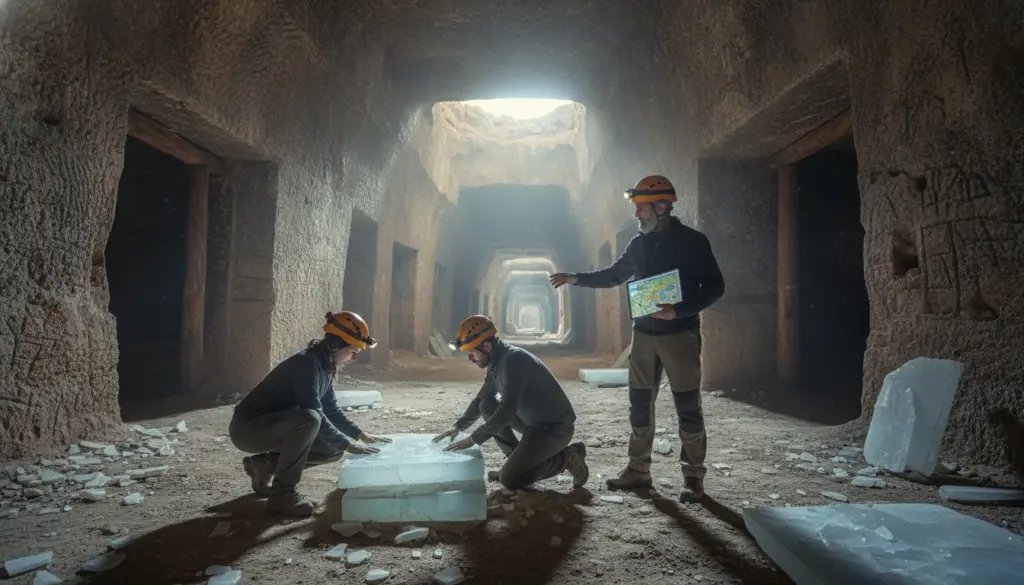
A geological team guided by Antonio Alonso-Jiménez determined these underground passages were explicitly carved to extract lapis specularis within the Segóbriga mining district. Recent geological assessments finally expose the sheer magnitude of this highly precise operation. Experts pinpointed the sprawling grid directly beneath a landscape still scarred by dozens of ancient sinkholes and vertical shafts.
The Subterranean Wealth That Enriched Cuenca
This specific region yielded immense deposits of transparent selenite gypsum. Ancient laborers skillfully sliced this mineral into paper-thin layers, effectively creating the world’s earliest window panes. These translucent sheets successfully trapped heat while allowing sunlight to flood into public baths, private estates, and civic structures. To put it simply, this was an industrial-scale enterprise rivaling the most massive Roman extraction sites ever built in Spain.
Often referred to as mirror stone, lapis specularis served a far greater purpose than mere decoration. Prior to the mass production of accessible flat glass, this unique geological treasure was the primary method for providing crucial light and thermal insulation across the ancient world’s most significant buildings.
A 20-Million-Year-Old Geological Phenomenon
The presence of this prized material in Cuenca is no accident. Roughly 20 million years ago, this entire zone consisted of shallow, interconnected lagoons. Over millennia, tectonic fracturing and underground water flows forged a stable subterranean environment. Maintaining a steady temperature between 15 and 20 degrees Celsius, these ideal conditions allowed the gypsum to crystallize with breathtaking clarity.
First-century records from figures like Pliny the Elder actually highlight the Segóbriga region as the premier source for the highest quality lapis specularis. Today, scientific surveys validate those ancient claims with concrete measurements. The La Condenada complex alone features over 5 kilometers of accessible tunnels, while the Los Espejares sector boasts a staggering 20 kilometers of intertwined galleries. This lucrative export generated such incredible local wealth that the city of Segóbriga easily financed grand monuments, including a circus, a massive amphitheater, and a theater.
Expert Tip: If you ever find yourself exploring ancient Roman architecture, closely examine the window frames. You might spot a flaky, pearlescent substance—that is genuine lapis specularis, successfully weathering the past two millennia.
Inside the Roman Engineering Masterpiece
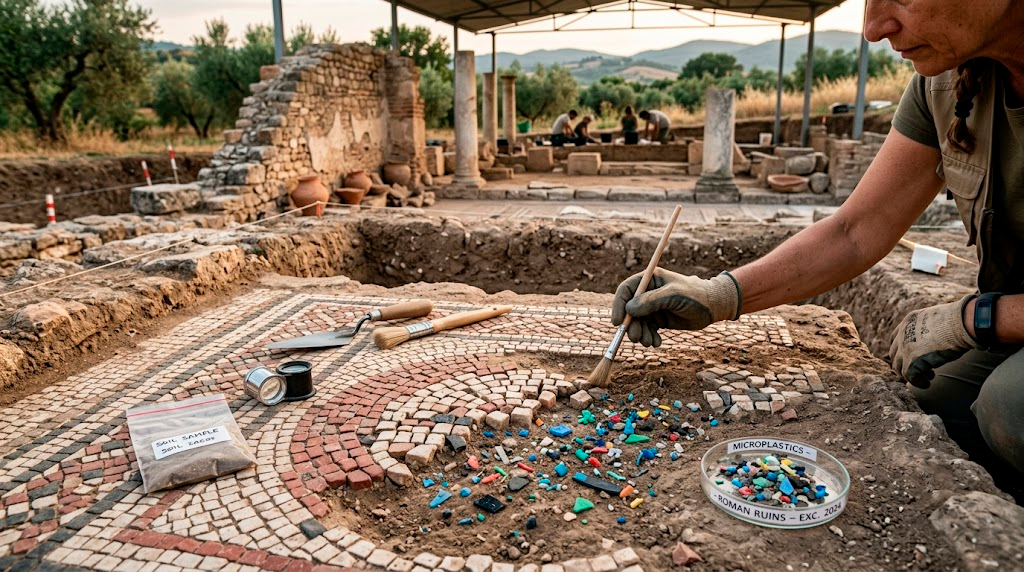
Picture ancient crews breaking ground by excavating vertical drops measuring exactly 2 by 2 meters, carefully carving footholds directly into the rock faces to serve as stairs. From the base of these drops, they painstakingly tunneled out incredibly tight corridors, many spanning less than a single square meter in width. The workforce relied entirely on heavy iron chisels. Because the site was abruptly abandoned during the second century AD and left largely undisturbed, thousands of these distinct tool marks remain perfectly preserved on the cavern walls today.
Navigating the pitch-black depths required ingenious lighting solutions. Excavators carved tiny alcoves known as lucernaria into the rock, placing small oil lamps at intervals of less than 1.5 meters. Furthermore, advanced hydraulic engineering was at play; archaeologists investigating Los Espejares identified a highly sophisticated drainage system designed to keep the deep tunnels completely free of floodwater.
While the overarching Roman state maintained control of the complex, local contractors managed the grueling daily operations. Highly trained craftsmen were tasked with delicately splitting the raw mineral, while enslaved individuals endured the most punishing physical labor. This bustling underground economy only ground to a halt when flat glass became economically viable, ultimately rendering the mirror stone obsolete. Fast forward to today, and beautifully preserved sites like La Mora Encantada actually allow visitors to step inside and witness the breathtaking scale of Roman ingenuity firsthand.
Keep this historical guide handy for your next archaeological adventure.