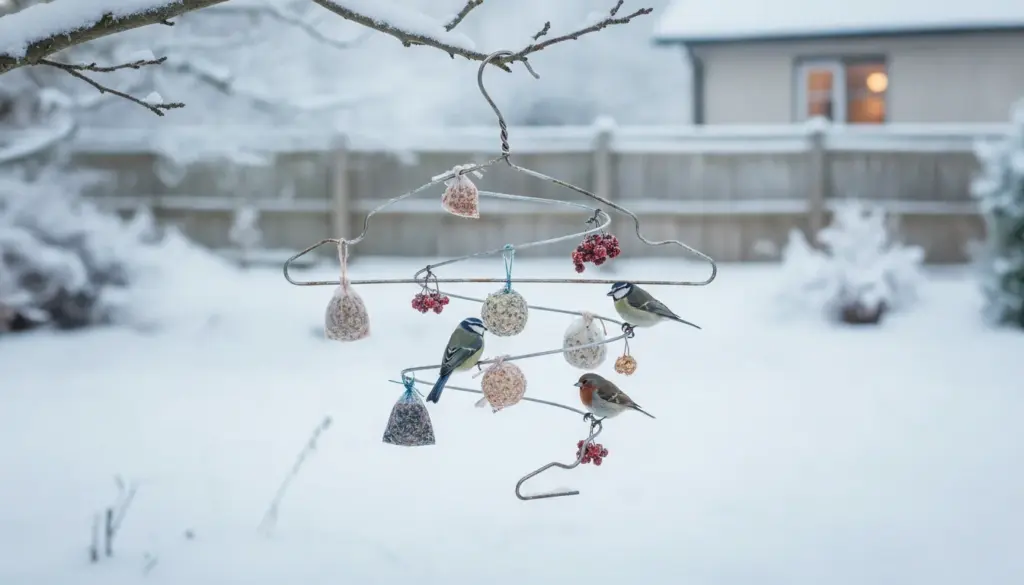
While gardens freeze and food gets buried under snow, nature lovers are raiding their closets for a forgotten item. Once considered useless clutter, a simple metal hanger is unexpectedly proving to be a clever tool for keeping backyard birds safe through the cold. By bending it a few times, this basic wardrobe staple transforms into a robust, elevated feeder mount. This clever trick achieves two things simultaneously: repurposing household waste while offering better protection for sparrows, tits, and blackbirds.
A simple wire hanger as a cold-weather lifesaver
Small birds face incredibly tough conditions during the colder months. They burn massive amounts of energy trying to stay warm, just as natural food sources like berries, seeds, and insects become scarce. Setting up a feeding station on your balcony or in your yard can truly mean the difference between a bird thriving and merely surviving.
However, standard setups frequently fail. Wind gusts easily knock over basic trays, mesh bags holding fat balls tear, or feeders are inadvertently placed right where neighborhood cats can pounce. When this happens, a well-intentioned feeding spot turns into a dangerous trap.
By using a properly bent wire coat hanger, you can elevate the feeding station, making it far more stable while keeping predators at bay.
This everyday piece of metal offers the perfect combination of traits. The wire is rigid enough to withstand winter storms and the combined weight of several foraging birds, yet pliable enough to shape with standard household pliers. Plus, you are giving a second life to an item that would otherwise end up in the trash.
How to bend a hanger into a secure bird feeder mount
You only need a couple of basic items for this quick DIY project: a sturdy wire hanger, combination pliers, and perhaps some wire cutters. The thick, older hangers often given away by dry cleaners or boutique clothing shops work best.
Step-by-step assembly:
- Gently stretch the hanger out until it forms a straight metal rod measuring roughly 14 to 16 inches (35–40 centimeters).
- At one end, bend the wire to create a large, completely closed loop. This is where your feeder will attach.
- Make sure this bottom loop is wide enough to easily accommodate the hook, string, or ring of your chosen bird feeder.
- Fashion the opposite end into a robust hook that securely fits your preferred hanging spot, whether that is a pergola, tree branch, balcony railing, or screw hook.
- Test the setup by hanging the mount empty first to ensure your feeder will ultimately sit horizontally.
Avoid using metal that is overly thin, misshapen, or covered in rust, as it carries a higher risk of snapping or sagging under pressure. Always select a hanger that still feels structurally sound. If you have any doubts about its strength, it is better to grab a different one.
A properly balanced wire mount guarantees the feeding tray will not tilt, preventing expensive seeds from spilling onto the ground below.
Finding the ideal spot: Elevated, open, and predator-free
Where you decide to place the feeder largely dictates how safely the local wildlife can dine. Utilizing a wire mount naturally creates essential distance between the food and ground-level obstacles, which serves as a brilliant deterrent for stealthy predators like martens and cats.
Guidelines for optimal height and spacing:
- Suspend the feeding station at a minimum height of 5 feet (1.5 meters), though aiming for around 6 feet (1.8 meters) is ideal.
- Maintain roughly 6.5 feet (2 meters) of clearance from solid structures like walls, fences, sheds, and thick tree trunks.
- Opt for a relatively open area where stalking predators have zero cover for an ambush.
Because the metal has a slight natural spring to it, the feeder will gently sway in the breeze. This subtle movement makes it incredibly difficult for rats or cats to climb. Wild birds, on the other hand, quickly adapt to the gentle rocking and will land effortlessly after just a few initial attempts.
In larger outdoor spaces, the best location is usually right in the middle of a lawn or open flower border, offering a great view from your living room window. For apartment dwellers, the hook can easily attach to a sturdy balcony railing or a secure screw in the brickwork. Just ensure the birds have a clear flight path in and out, and try to position it so discarded seed husks do not rain down on your neighbors.
What to put in the feeder—and what to avoid
While the custom metal mount brilliantly solves the issue of a wobbly or unsafe feeding station, the actual menu you offer is just as critical. Not every leftover from your kitchen is safe for avian visitors.
Top food choices for winter birds:
- Black sunflower seeds (these boast high fat content and are easy for small beaks to crack open)
- Premium bird seed blends from dedicated garden centers or pet supply shops
- Plant-based fat balls, carefully removed from any hazardous plastic netting
- Small chunks of fresh pear or apple, along with the occasional handful of water-soaked raisins
It is equally important to know what to leave out. Table scraps, cookies, bread, milk, and animal fats can trigger severe digestive issues in wild birds. Anything containing salt must also be strictly avoided.
Keeping it clean: Hygiene for healthy flocks
Whenever large numbers of birds congregate in one spot, the risk of disease transmission naturally rises. Here, your upcycled wire hanger offers yet another practical advantage: it allows you to take the entire feeding station down in one swift motion for hassle-free cleaning.
Wildlife experts strongly suggest washing your feeders at least once or twice a week. Scrub the surfaces thoroughly using hot water and a dash of eco-friendly dish soap, then rinse them completely. Remove all traces of mold or crusted-on seeds, let the components air dry fully, and simply hook it back onto your sturdy metal mount.
Establishing a routine cleaning schedule guarantees that your well-meaning food supply never turns into a hotspot for avian illnesses.
When to start feeding and when to taper off
In cooler climates, providing supplemental food makes the biggest impact during the harshest weather, typically stretching from mid-November right through to late March. You are making a massive difference during long stretches of freezing temperatures, heavy rain, or snow, as natural food reserves are effectively locked away.
As spring approaches, you should begin to reduce the amount of food provided. By this time, birds are naturally transitioning back to a diet of insects and fresh buds. Rather than stopping abruptly, slowly taper off your feeding routine over a few weeks so the local flocks can comfortably adjust to the seasonal shift.
Why this small gesture means so much more
Restyling an old wire coat hanger creates much more than just a reliable feeding spot. It cuts down on household waste, provides a fantastic opportunity to get children involved in a hands-on nature project, and deepens your connection with local wildlife. Birds that emerge from winter well-fed and strong are significantly more likely to successfully rear chicks later in the year, which directly boosts local ecosystems.
If you want to take your backyard wildlife support to the next level, pair your new feeder setup with berry-producing shrubs, a shallow water dish, and dense hedges for safe roosting. This combined approach cultivates a vibrant, year-round haven of food and shelter—and it all begins with a simple metal closet hanger that was almost thrown away.