Countless garden enthusiasts wait until the sun peeks out to hang their nesting boxes, only to realize they’ve missed the boat. If you envision a backyard teeming with cheerful sparrows and busy tits, a perfectly mounted but entirely empty birdhouse can be incredibly frustrating. The culprit usually isn’t the design or the materials used, but a fundamental misunderstanding of nature’s timeline. Avian creatures operate on strict seasonal schedules that rarely align with our weekend DIY projects in March.
Why Spring is Actually Your Biggest Trap
Many homeowners associate spring cleaning with the sudden arrival of wildlife. Dragging patio furniture outside and planting the first bulbs often triggers the impulse to screw a beautiful wooden box to the fence. While this feels incredibly logical to us, the timing is severely delayed for our feathered visitors.
House Hunting Happens While We Hibernate
For familiar species like the great tit, blue tit, and robin, preparations for breeding season kick off during late winter. Male birds are already busy establishing territories, singing loudly to impress potential mates, and scouting out available cavities. By the time most humans experience spring fever, a vast majority of breeding pairs have firmly secured their nesting sites.
Putting up a birdhouse in March simply turns it into a garden ornament for the current breeding cycle.
Introducing a brand-new object into an established territory during this high-stress period often acts as a deterrent rather than an invitation. Instead of viewing the new addition as a convenient home, cautious birds perceive it as a strange and potentially dangerous anomaly.
Real Estate is Gone Before the Leaves Appear
As early as January and February, you can observe birds chasing one another, vocalizing intensely, and establishing fixed flight paths. During this critical phase, they divide up habitats and rigorously test potential nesting areas. Once the trees finally bud and your yard feels ready for spring, everything is already locked in:
- Partners have been selected
- Boundaries are distinctly marked
- Specific nest locations are finalized
A belatedly mounted box has virtually zero chance of immediate occupancy. Occasionally, it might host a second clutch later in the summer, but it will likely remain completely vacant until the following year.
The Winning Strategy: Install When Leaves Fall
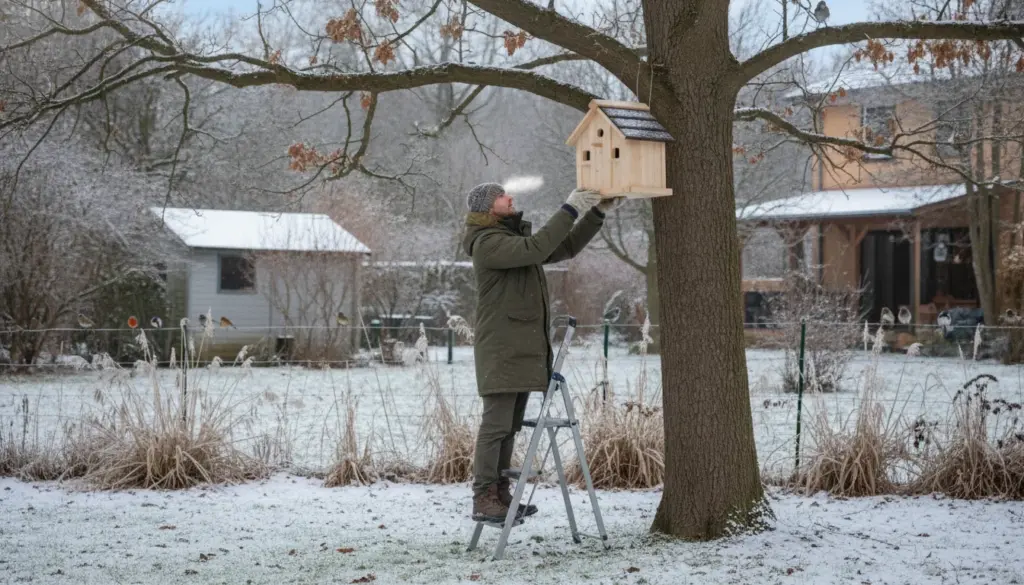
To dramatically increase your chances of attracting winged residents, you need to ignore your own seasonal instincts. The absolute best time to act arrives just as most people abandon their gardening duties: right in the middle of autumn.
The Ultimate Window: October Through December
The final three months of the year represent a quiet reproductive period for local wildlife. For property owners, this offers an ideal, relaxed window for outdoor projects. Mounting your nesting box in the fall allows it to seamlessly integrate into the environment for months, giving animals plenty of time to accept its presence long before mating begins.
By taking action early, you achieve three distinct advantages simultaneously:
- The structure naturally blends into the surrounding landscape
- Strong odors from manufacturing, paint, and hardware stores dissipate
- Birds can safely utilize the box as a winter shelter
Coordinate Placement with Fall Pruning
Autumn garden maintenance provides a highly practical benefit. Bare trees and visible branches make it incredibly simple to identify a robust, secure location. Clear visibility ensures you can easily:
- Select a sturdy trunk or thick branch
- Secure the box so it remains entirely motionless during heavy winds
- Identify a spot that remains inaccessible to roaming cats and predatory martens
Expert tip: Rely on heavy-duty, plastic-coated binding wire or straps. Driving nails directly into a living trunk can damage the tree and complicates any future adjustments.
Feathered Friends Despise Last-Minute Offers
Wild birds exhibit far more caution than we typically assume. Selecting a secure location to raise vulnerable chicks requires extensive deliberation. They will inspect, listen, and thoroughly evaluate a potential spot multiple times before committing to laying eggs.
The Importance of a Long Security Check
When a box has been hanging quietly for several months, potential occupants can observe it without pressure. They need to verify:
- That the structure is completely stable and doesn’t rattle
- That no opportunistic predators are lurking nearby
- That human foot traffic doesn’t constantly cross the entrance path
A nesting box must first establish itself as a completely harmless fixture in a bird’s daily foraging route before it can graduate to a maternity ward.
Waiting until the first sunny spring day completely deprives them of this vital observation period. What feels proactive to us actually represents a massive risk during their busiest season.
Becoming Part of the Scenery
New objects immediately stand out, and in the wild, catching the eye is rarely a positive trait. A wooden box exposed to the elements throughout autumn and winter will slowly turn gray, gather a slight green tinge of algae, and visually melt into the bark. This exact weathered appearance is what ultimately earns their trust.
Winter Lifesaver Turned Spring Nursery
A birdhouse serves a much greater purpose than just facilitating reproduction. During freezing nights, it can literally mean the difference between survival and perishing for small songbirds.
Crucial Roosting Spots for Frosty Nights
Harsh winter temperatures force tiny birds to expend massive amounts of energy merely to stay warm. Accessing a dry, windproof cavity significantly reduces this metabolic strain. Species like the wren and various titmice actively seek out enclosed spaces, sometimes even huddling together inside a single small box to share body heat.
An empty house, perhaps containing a few remnants of old nesting material, transforms into a thickly insulated sleeping bag during freezing January nights.
By securing your box in the fall, you grant these fragile creatures a vital lifeline during intense frost.
Transitioning from Winter Bed to Maternity Ward
Animals that frequently utilize a box for winter roosting already recognize it as a heavily vetted safe zone. Upgrading from a winter shelter to a spring breeding site is a remarkably natural progression. They already know that the roof doesn’t leak, the walls withstand gales, and the area remains peacefully undisturbed.
Let Weather Wash Away the “New” Smell
Freshly milled wood might smell delightful to humans, especially when treated with protective oils or stains. To wildlife, however, these are highly unnatural, harsh chemical odors that immediately trigger deep suspicion.
Unnatural Scents Cause Suspicion
Even completely untreated timber carries the lingering scent of hardware stores, noisy workshops, and human hands. Treated woods introduce an additional layer of paint, oil, or varnish fumes. If you hang a freshly constructed or purchased box immediately, these overwhelming odors will radiate from the entrance for weeks.
Starting the process months in advance allows continuous rain, brisk winds, and winter sunshine to naturally flush out those chemical traces. Eventually, the enclosure will smell exactly like the great outdoors: damp timber, fresh moss, and rugged bark.
The Calming Effect of a Natural Patina
After enduring a season of rough weather, the exterior develops a beautiful, muted gray wash. Tiny imperfections, microscopic algae, and a distinctly aged aesthetic help it merge seamlessly with the host tree. This perfectly imperfect look signals to cautious parents that the location has stood the test of time.
How to Select the Ultimate Garden Location
Timing is only half the battle; the precise physical placement often dictates whether you’ll host a thriving family or stare at an empty box.
Direction, Height, and Essential Shelter
Mounting a box on a stark, isolated pole might look tidy to a homeowner, but to a bird, it resembles a neon sign for passing predators and harsh weather. Fastening it directly against a tree trunk, partially shielded by surrounding branches, provides a much stronger sense of security.
Keep It Dry and Breezy
When purchasing or building your own, pay close attention to structural details:
- Ensure tiny drainage holes exist in the floor to manage moisture
- Look for narrow ventilation gaps situated just beneath the roofline
- Confirm the roof angles slightly forward to guide rain safely away from the entry hole
Excessive internal moisture quickly breeds dangerous mold and parasites. Fledglings are incredibly susceptible to damp conditions and may fail to survive if their environment remains structurally soggy.
Gentle Late-Winter Maintenance
As winter winds down in late January or February, a brief cleaning session is highly recommended. Carefully extract any old debris and tap out loose dirt. Never use harsh chemical cleaners or abrasive sprays. A simple sweep with a dry hand brush is more than sufficient.
Cultivating a Thriving Backyard Ecosystem
A thoughtfully positioned, properly timed nesting box provides more than just pleasant kitchen-window viewing. It actively supports the natural biological balance of your personal green space. During peak breeding times, energetic tit families work tirelessly to capture thousands of caterpillars, mosquitoes, and other garden pests. This natural pest control translates directly to healthier fruit trees and pristine foliage.
To create a true avian paradise, pair your nesting boxes with dense shrubs for quick cover, native insect-attracting blooms, and reliable winter feeding stations. This approach builds an integrated micro-network where rich food sources, safe hiding spots, and secure breeding grounds exist in perfect harmony.
Finally, exercise extreme restraint once chicks hatch. Children standing directly underneath with stepping stools, or curious pets constantly patrolling the base of the tree, will induce massive panic. Highly stressed parents may simply abandon their feeding routines. Maintaining a respectful distance dramatically increases the likelihood of welcoming new broods year after year, simply because the territory has proven itself to be a genuinely tranquil haven.