A Crisp Escape from Heavy Winter Stews
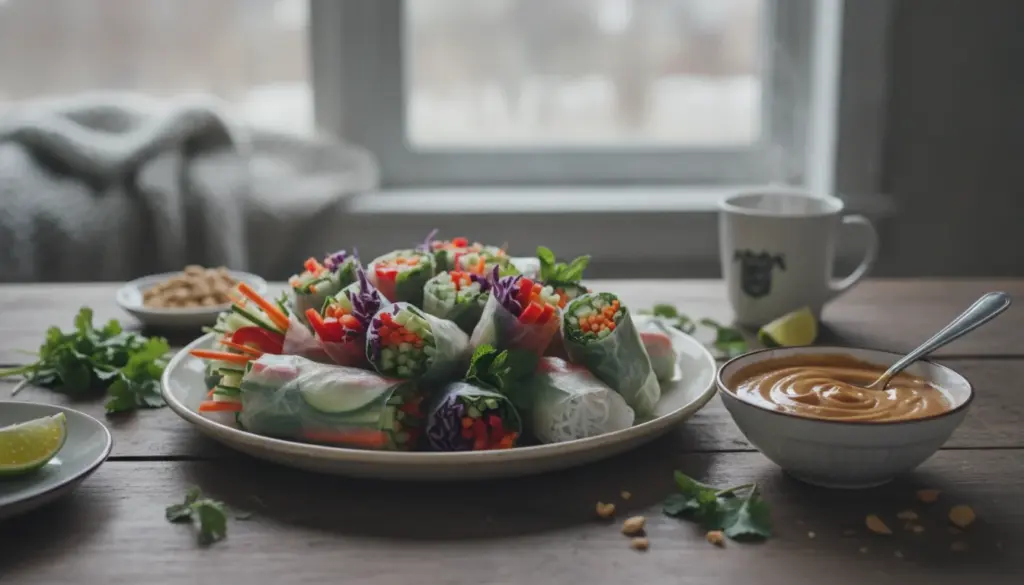
Craving a vibrant, crunchy bite but want to skip a long cooking session? These chilled, vegetable-packed rice paper rolls deliver a revitalizing, spring-like energy right in the middle of winter. They come together in a flash, leave you feeling surprisingly satisfied, and rely entirely on crisp produce, fresh herbs, and a velvety, tangy peanut dip.
After weeks of indulging in rich casseroles and hearty mashed potatoes, by late winter, our palates often crave a refreshing change. We don’t necessarily want a standard salad, but rather something that offers a satisfying snap, bright colors, and comforting textures. These winter vegetable rolls hit that exact sweet spot—they are nourishing without weighing you down, while delivering massive flavor.
The foundation is beautifully straightforward. You’ll need rice paper wrappers, translucent glass noodles, sturdy winter staples like red cabbage and carrots, plenty of fresh herbs, and a rich peanut-based dressing. Served cold, this entire meal requires just twenty minutes from chopping to rolling. It truly feels like serving up a slice of spring, using ingredients pulled straight from the cold-weather produce aisle.
What You Need for 4 People
To assemble roughly eight generously sized wraps, gather the following:
- 8 medium-sized rice paper wrappers
- 100 grams of rice vermicelli (glass noodles)
- 1/4 of a firm red cabbage
- 3 medium carrots
- 1 large bunch of fresh mint
- 2 tablespoons of peanut butter (preferably 100% peanuts)
- 2 tablespoons of soy sauce
- The juice of 1 lime
- Hot water (for thinning the sauce and softening the wrappers)
The true magic of this recipe lies in its recognizable, whole ingredients. When you start with high-quality, flavorful produce, you barely need any complex seasonings to make the dish shine.
Step-by-Step: Assembling Your Winter Veggie Rolls
1. Flash-Cook and Chill the Noodles
Bring a pot of water to a rolling boil and drop in your rice vermicelli. Let them cook for about 3 to 4 minutes, keeping an eye on the package instructions. Drain the pasta immediately and rinse it thoroughly under ice-cold running water before leaving it to drain in a colander.
Cooling the noodles instantly halts the cooking process, ensuring they remain firm and just sticky enough to hold their shape perfectly inside your tight bundles.
2. Slice the Vegetables Paper-Thin
Wash the red cabbage and shred it into the finest strips possible. Using a mandoline slicer or a very sharp chef’s knife works best here. The thinner the slices, the more delicate and pleasing the final texture will be.
Peel the carrots and either grate them coarsely or slice them into fine julienne matchsticks if you prefer a heartier crunch. Rinse your fresh mint, pat it completely dry, and gently pluck the leaves from their stems.
3. Whisk the Tangy Peanut Dressing
In a small bowl, combine the peanut butter, soy sauce, and fresh lime juice. Whisk vigorously using a fork until the mixture forms a thick paste. Gradually stream in splashes of hot water while continuing to stir, stopping once you achieve a smooth, pourable consistency that lightly coats the back of a spoon without feeling overly sticky.
Taste your creation and adjust as needed. Add an extra squeeze of lime for brightness, a dash more soy sauce for depth, or a pinch of chili flakes if you enjoy a little heat.
The Secret to Tear-Free Rice Paper Rolling
Handling delicate rice wrappers can feel intimidating, but a few professional tricks will keep them intact and prevent frustrating sticking.
4. Briefly Soak the Wrappers
Fill a wide, shallow bowl or a deep plate with lukewarm water. Submerge a single rice sheet, removing it after just a few seconds once it softens slightly but still holds some rigidity. Lay the wrapper flat onto a clean, slightly damp kitchen towel.
As it rests on the fabric, the rice paper will naturally continue to soften and become pliable. This technique prevents the wrapper from turning mushy, which is the primary cause of tearing.
5. Stuff and Wrap Tightly
On the lower third of your softened wrapper, arrange a small bundle of chilled noodles, a pinch of shredded cabbage, some carrot matchsticks, and a few mint leaves. Make sure to leave an inch or two of empty space along the outer edges.
Fold the sides inward, tuck the bottom over your filling, and roll it up securely. Repeat this process until your ingredients are gone. Take your time; your technique will naturally improve after completing the first couple of rolls.
Creative Twists Beyond Cabbage and Carrots
The winter produce drawer offers far more potential than standard root vegetables. With a few simple adjustments, you can completely transform the flavor profile.
Crisp ingredients that shine in cold rolls:
- Thinly shaved black radish or daikon for a sharp, peppery kick
- Julienned celeriac, briefly blanched for a slightly softer bite
- Matchsticks of tart apple (such as Granny Smith) for a bright, fruity contrast
- Finely shredded leeks or scallions to add a savory punch
Slipping in a few strips of green apple pairs phenomenally well with the nutty dipping sauce. That sweet-and-sour element elevates both the earthy root vegetables and the savory dip.
A quick note on herbs: If mint isn’t your favorite, feel free to experiment. Fresh cilantro is a classic substitute, while Thai basil introduces a wonderful, slightly licorice-like aroma that complements crisp vegetables perfectly.
How to Keep Your Rolls Fresh Overnight
While freshly assembled rice wraps boast the best texture, they absolutely work as a prepared lunch or meal-prep option for the following day.
To store them, wrap each piece individually in plastic film, or place them in an airtight container separated by lightly dampened lettuce leaves. The moisture from the greens prevents the delicate rice skins from drying out and turning rubbery.
Alternatively, you can arrange them on a platter, drape a damp paper towel or cloth over the top, and seal the dish tightly. Store them in the refrigerator, but remember to pull them out roughly twenty minutes before eating so the flavors can return to room temperature.
Always pack your peanut dressing separately. Keeping the sauce on the side ensures the exterior remains beautifully intact and preserves the satisfying crunch of the interior.
Fitting Winter Rolls Into Your Weekly Routine
These versatile vegetable parcels are incredibly adaptable. Try serving them as:
- A rapid weeknight dinner, paired with a warming bowl of miso soup or clear broth
- A convenient, mess-free office or school lunch
- An elegant, vibrant appetizer before an Asian-inspired main course
- A colorful party snack, sliced on a bias to showcase the rainbow inside
For those looking to incorporate more plant-based meals, these make for an excellent vegetable-forward dinner. Thanks to the carbohydrates in the noodles and the healthy fats in the dressing, they offer much more sustenance than a basic salad, all while delivering a fantastic dose of dietary fiber and vitamins.
Pro Tips for Prep, Timing, and Reducing Waste
If speed is your priority, overlapping your tasks is key. Get the noodle water boiling first, then immediately move on to shredding your produce while the vermicelli cooks and chills. Have someone else whisk together the dressing, and you will easily have your first batch ready in under fifteen minutes.
Got leftover shredded cabbage or carrots? Toss them together the next day with a little oil, vinegar, and mustard for a warm slaw, or throw them into a quick stir-fry. Your leftover peanut sauce will easily last for up to three days in a sealed jar in the fridge. It tastes phenomenal drizzled over roasted vegetables, served alongside baked fries, or spread inside a sandwich with grilled peppers.