From Closet Clutter to Wildlife Haven
Many nature enthusiasts love the idea of nourishing backyard wildlife, yet the steep prices of commercial feeding stations can quickly become a deterrent. Fortunately, crafting a durable, zero-cost feeding station requires nothing more than a basic wire clothes hanger, a piece of fruit or a suet ball, and a couple of hand tools. Within moments, you can set up a sturdy dining spot that local robins, tits, and blackbirds will flock to almost instantly.
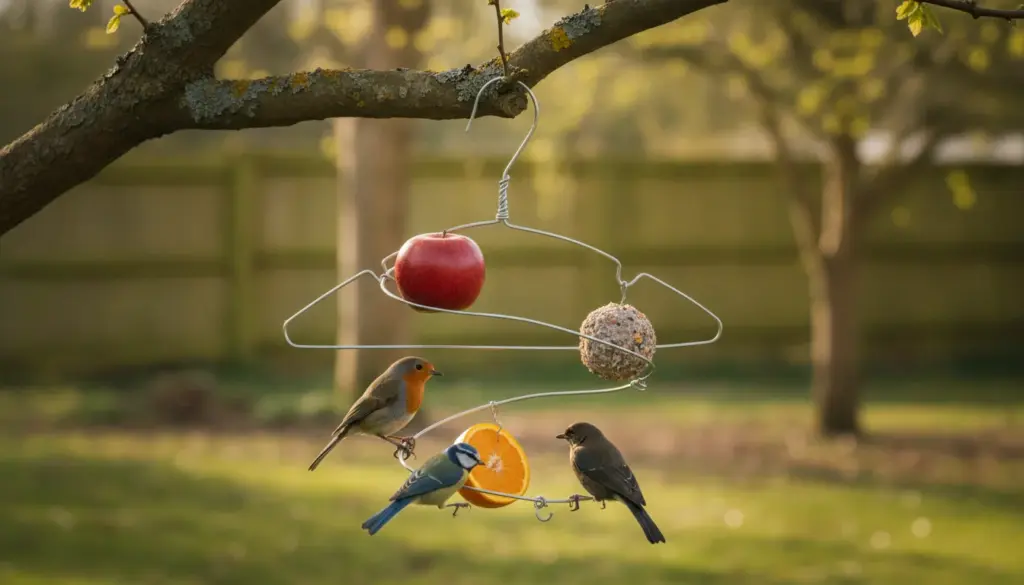
It might look like a useless piece of closet junk, but a standard metal wire hanger serves as the ultimate foundation for an outdoor bird feeder. The steel construction is incredibly pliable, slim, and likely just gathering dust in your wardrobe right now. By carefully reshaping this everyday item, you craft a minimalist, highly functional holder that easily hooks onto any tree branch.
Dedicating just three minutes of light manual work transforms household waste into a vital resource for local fauna, completely free of charge.
During chilly spells and the early days of spring, providing supplemental nutrition is genuinely a matter of survival for garden birds. These tiny creatures burn massive amounts of energy through courtship displays, nest construction, and feeding their newly hatched chicks. Setting up a secure, generously stocked feeding location offers them the critical caloric boost necessary to thrive during the demanding breeding season.
Essential Supplies for Your DIY Feeder
You probably already own everything required for this quick weekend project. There is absolutely no need for complicated blueprints, hardware store runs, or specialized equipment.
- 1 thin metal wire clothes hanger (the classic dry-cleaner style works perfectly)
- 1 pair of combination pliers or wire cutters
- 1 pair of flat-nose pliers for precision bending
- 1 whole apple or a high-quality, plant-based bird fat ball
The slender gauge of these everyday hangers packs surprising tensile strength. While it effortlessly supports the weight of a heavy apple or suet cake, you can still manipulate the wire easily using just your hands and basic pliers. A quick safety reminder: always work methodically to avoid pinching your skin, keeping your fingers clear of the plier jaws. If necessary, slip on a pair of heavy-duty work gloves for extra protection.
Step-by-Step Feeder Construction
1. Reinforce the Hanging Hook
Start by placing your wire hanger flat on a sturdy workbench or table. Grab your flat-nose pliers and carefully untwist the coiled section positioned just beneath the main top hook. Slowly straighten out this twisted section until you are left with a single, elongated piece of straight wire dropping down from the top.
It is crucial to leave the large, curved upper hook entirely untouched, as this is how you will suspend your new creation from a tree branch. To prevent the entire structure from spinning wildly during heavy winds, use your pliers to firmly crimp the neck of the hook. A tightly squeezed base ensures a much more stable dining experience for your feathered visitors.
2. Shape the Food Receptacle
Now comes the enjoyable part: transforming that long, straightened wire into a custom food holder. The optimal shape depends entirely on the type of snack you plan to serve.
For Fresh Fruit (Apples or Pears):
If you are offering an apple, forming a sharp spike or a wide U-shape yields the best results. Use your flat-nose pliers to bend the bottom four to six inches of the wire into a distinct point. Push this pointed tip slightly backward to create a subtle barb, which locks the fruit securely in place. Simply skewer the apple from the bottom upwards until it rests firmly against the wire’s curve. Alternatively, fashion a wide, spoon-like U-shape by bending both ends inward, allowing the apple to sit snugly cradled in the metal curve.
For Suet and Fat Balls:
A miniature metal basket or tight spiral design is ideal for holding fat blocks. Grip the bottom six to eight inches of wire and twist it into a dense corkscrew shape. Ensure the spiral gaps are narrow enough that the suet will not slip through. Leave a small gap at the top to slide the treat inside, then gently pinch the opening shut with your pliers.
Critical wildlife safety tip: Always fold any exposed, sharp wire ends inward. Crimp them down into tiny, blunt loops to guarantee that landing birds never scratch their delicate wings or feet.
Strategic Placement for Optimal Safety
Predator Protection
Selecting the right location is just as important as the food itself. Look for a robust branch positioned roughly seven to ten feet above the ground, making it incredibly difficult for neighborhood cats to ambush feeding birds. Avoid installing the hanger directly next to sheds, low rooflines, or wooden fences that felines use as jumping platforms.
Keep these golden rules in mind:
- Maintain a minimum height of seven feet off the ground.
- Keep a ten-foot buffer away from any structures cats can scale.
- Position the setup near dense shrubs so smaller birds have an immediate escape route if startled.
Weather and Window Hazards
Never suspend a feeding station directly in front of large glass panels. Leaving a distance of at least thirty feet from your house windows drastically reduces the risk of fatal collisions when startled flocks scatter.
Seek out a reasonably sheltered spot so the wire does not swing violently in the breeze. However, adequate air circulation is still necessary to dry out the food rapidly following a rainstorm. Tucking the hanger just under the edge of a light leafy canopy provides the perfect balance of shelter and airflow.
Why Tiny Songbirds Prefer Wire Feeders
This slender, suspended design offers distinct advantages over bulky, traditional wooden bird tables. Lightweight species—such as blue tits, great tits, finches, and robins—have no trouble gripping the thin metal gauge to snatch a quick bite. Meanwhile, heavier, more aggressive birds find it incredibly difficult to balance on the swaying wire, prompting them to look elsewhere for an easy meal. This naturally reserves your high-energy snacks for the smaller, more agile garden visitors.
Furthermore, a repurposed steel frame boasts incredible longevity. Unlike wood or cheap plastic, it will not crack during freezing winter nights or rot away after heavy autumn storms. A single hanger can serve your garden for multiple seasons, completely eliminating unnecessary plastic waste while improving in utility over time.
Maintaining Hygiene and Dietary Variety
Consistent backyard feeding requires a strict commitment to hygiene. Leftover, rotting food quickly becomes a breeding ground for harmful bacteria and toxic fungi, which can devastate local bird populations.
- Swap out fresh fruit regularly, immediately tossing any pieces showing signs of mold.
- Never leave suet balls hanging during unexpectedly warm weather, as the fats quickly turn rancid and dangerous.
- Periodically unhook your bare metal frame, scrub it down with boiling water, and allow it to air-dry completely before restocking.
Rotating your menu encourages a diverse array of species to visit your yard. Pears and apples are absolute magnets for starlings and blackbirds. Suet cakes reliably draw in sparrows and tits, whereas offering unsalted peanuts or sunflower seeds will attract entirely different crowds. Observe which feathered guests frequent your yard and tailor your offerings accordingly.
Expanding Your Eco-Friendly Avian Buffet
Once you witness the success of your first wire hanger setup, you will likely want to expand. Stringing multiple modified hangers along a single branch creates a bustling, multi-level feeding line. Beyond closet staples, countless other household items can be upcycled into brilliant backyard feeding solutions:
- Repurpose chipped ceramic teacups and matching saucers into hanging seed bowls.
- Thoroughly wash empty glass condiment jars, pack them tightly with unsalted peanuts, and suspend them using natural twine.
- Secure an old broomstick or sturdy wooden dowel just below your feeding stations to act as a convenient resting perch.
When designing new setups, always prioritize three non-negotiable factors: absolute safety, ease of sanitation, and the complete elimination of sharp edges. As long as you follow these core principles, almost any ceramic or metal household object can enjoy a productive second life outdoors.
For families, shaping wire and skewering fruit transforms into an outstanding weekend activity. Guiding children through this process organically teaches them about seasonal wildlife behavior and instills a deep respect for local ecosystems. Once a vibrant flock of robins and tits makes your garden their daily pit stop, you will never look at a tangled metal hanger as useless garbage ever again.