The secret weapon for a low-maintenance landscape
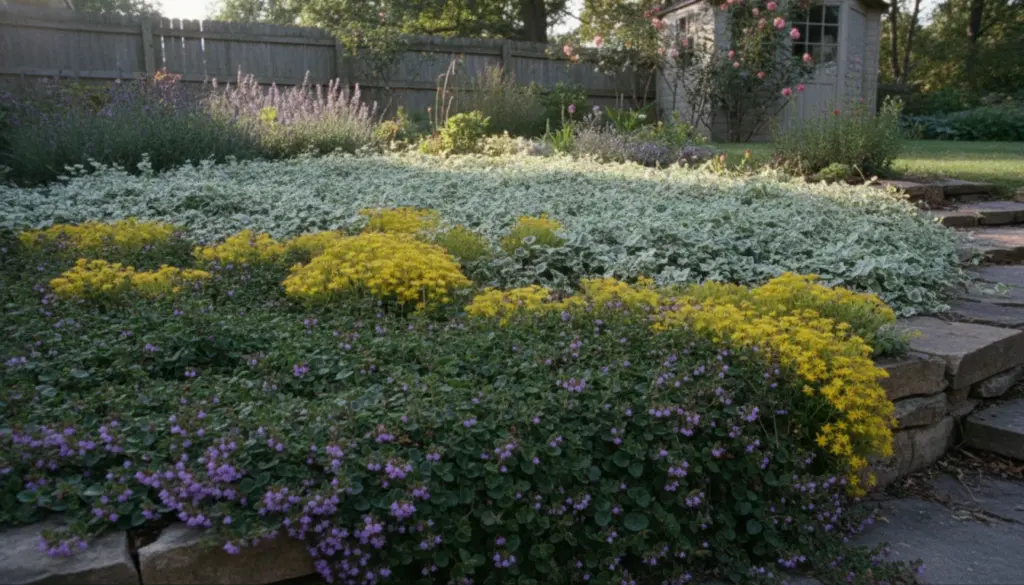
Crafting a well-thought-out mix of three perennial ground covers can completely transform any slope, border, or front yard. By following a straightforward planting strategy, you can easily eliminate bare patches and give stubborn weeds zero chance to take root. This approach requires absolutely no complex landscaping skills, making it perfectly suited for weekend garden enthusiasts who want maximum impact with minimal effort.
Why creeping perennials deserve a spot in your yard
Ground covers occasionally suffer from an unfair reputation. Many gardeners fear these spreaders will aggressively take over and smother neighboring plants. In reality, these issues usually arise when a single invasive variety dominates a space, or when species with clashing growth cycles compete for the same resources.
When you select the right varieties, you tap into their incredible landscaping benefits:
- They act as a natural, living mulch to heavily suppress weed growth.
- They shield the vulnerable topsoil from harsh frost and summer evaporation.
- They give raw garden borders a highly polished appearance incredibly quickly.
- They create vital micro-habitats and forage sources for local pollinators and small wildlife.
The secret to horticultural success isn’t about buying the most expensive botanicals. Instead, it relies on combining specific varieties that naturally alternate their blooming schedules and utilize entirely different root depths.
The 3-plant formula for 365 days of color
Professional growers frequently rely on a specific, easy-to-manage trio to create a continuous floral display. These resilient perennials are readily available at most local garden centers and are tough enough to survive harsh winter freezes.
1. Winter heath (Erica carnea): vibrant life in gray months
When the rest of the landscape lies dormant, winter heath steps up to provide vital visual interest. This compact, low-growing shrub bursts with tiny, bell-shaped blossoms in shades ranging from crisp white to vibrant deep pink.
- Active Season: Roughly January through April
- Average Height: Around 10 to 20 centimeters
- Bonus Feature: Remains fully evergreen and acts as a crucial food source for early-waking bees
Its dense growth habit creates a living winter carpet that beautifully masks bare soil, instantly making the yard feel less gloomy. For optimal performance, provide this resilient plant with a sunny spot and well-draining earth.
2. Creeping phlox (Phlox subulata): the late spring cushion
As temperatures finally rise, creeping phlox takes center stage. This incredibly low-profile perennial transforms ordinary stretches of dirt into a vibrant, tightly woven mat of blue, white, pink, or purple flowers.
- Active Season: Roughly May through August
- Average Height: 5 to 15 centimeters
- Bonus Feature: Exceptionally brilliant for trailing over retaining walls, edging pathways, and covering steep slopes
Even after the spectacular floral display fades, its delicate, needle-like foliage remains visually appealing. Because creeping phlox develops a very shallow root system, it pairs flawlessly with deeper-rooted botanical companions.
3. Leadwort (Ceratostigma plumbaginoides): a blue late summer and blazing autumn
Right as summer winds down and other perennials begin to look tired, this slightly less common ground cover truly shines. Leadwort produces striking, brilliant blue flowers at the exact moment your garden desperately needs a fresh pop of color.
- Active Season: September often extending right through December
- Average Height: Approximately 20 to 30 centimeters
- Bonus Feature: Lush green leaves transition into a spectacular fiery orange and red autumn display
Leadwort sends its roots much deeper into the earth than creeping phlox, allowing both to happily share the same real estate. Together, these three act like relay runners: winter heath tackles the bitter cold, creeping phlox handles spring and early summer, while leadwort finishes the year strong in late summer and autumn.
Planting technique: 5 per square meter in a staggered layout
The math behind this successful landscape design is remarkably simple. You only need five small plants (standard nursery pot size) for every square meter. Not one more, not one less. This precise ratio ensures they weave together quickly while leaving just enough breathing room for each individual species to establish its territory.
A solid landscaping rule of thumb: Distributing exactly five plants per square meter across these three varieties will generate a completely solid, weed-suppressing mat within just one to two growing seasons.
Why triangles always beat straight lines
Novice planters often arrange their greenery in rigid, geometric rows. While this might look tidy on planting day, straight lines actually highlight bare patches and make seasonal floral transitions look clunky. A staggered, triangular layout naturally mimics organic growth patterns and fills in spatial gaps far more effectively.
This slightly irregular grid creates a beautifully flowing landscape. When one species finishes its bloom cycle and visually recedes, its neighbor gracefully steps in to camouflage the transition, preventing any harsh, empty squares from appearing in your beds.
Subsurface harmony: how they avoid suffocating each other
It is entirely natural to worry that trailing plants might choke one another out. However, this specific trio shares space brilliantly by utilizing completely different soil horizons.
- Winter heath prefers spreading its roots laterally through a loose, well-aerated top layer.
- Creeping phlox constructs a tight, shallow network directly beneath the immediate soil surface.
- Leadwort dives much deeper, pulling vital moisture and nutrients from further down in the earth.
Because their active blooming phases are staggered, their peak demand for water and nutrients never overlaps. One pushes aggressive growth while another rests or quietly builds energy reserves below ground. This biological rhythm virtually eliminates subsurface competition.
Ideal planting times and effortless seasonal care
To give this botanical relay race the absolute best start, aim for one of two optimal planting windows. Mid-October is excellent because the earth retains residual summer heat, allowing roots to settle comfortably before freezing temperatures arrive. Alternatively, early spring works beautifully just as soon as the soil thaws and drains its winter sogginess.
Once established, maintenance becomes an absolute breeze. Because the ground is continuously covered by a living canopy, weed seeds rarely receive enough light to germinate. A quick, manual weeding session two or three times a year is usually all that is required. You rarely need to divide or replant anything; they will naturally spread until the designated zones are perfectly woven together.
Where does this combination thrive?
This resilient trio performs best in full sun to partial shade, provided the ground offers decent drainage. Consider utilizing this clever landscaping hack in these locations:
- Steep banks along a driveway or terrace where maneuvering a lawnmower is dangerous or difficult.
- Narrow, frustrating planting strips hugging a fence line or dense hedge.
- Front yards that need to look pristine year-round but receive very little active maintenance.
- Borders running alongside footpaths to ensure continuous color right next to your walkway.
If your property suffers from heavy, compacted clay, take time to heavily amend the top layer with generous amounts of compost and coarse sand to improve vital root aeration. In exceptionally dry, sun-baked locations, you may need to provide supplemental watering during their very first year until those root systems are locked in.
Design variations and common pitfalls to avoid
Gardeners with expansive spaces can confidently repeat this trio across multiple landscape beds, utilizing them as a vibrant living underlayment beneath taller ornamental grasses or woody perennials. Try placing dwarf crabapples, fragrant lavender, or tall sage in the background, letting this creeping trio act as a rich, colorful foreground.
To guarantee success, simply avoid these classic gardening mistakes:
- Planting too sparsely: Using fewer than five plants per square meter will result in frustrating, long-lasting bald patches that invite weeds.
- Overcomplicating the mix: Yielding to the temptation of adding a fourth or fifth ground cover variety will shatter the carefully balanced root ecology.
- Color blocking: Keeping the species separated into distinct, rigid sections defeats the relay-race purpose, leaving you with noticeable seasonal dead zones.
By dedicating a single mild spring or autumn afternoon to installing this triangular matrix, you secure years of vivid, low-effort landscaping. It is an incredibly forgiving way for beginners to master perennial layering, while experienced green thumbs appreciate having an effortless, evergreen foundation that keeps the garden alive even during the darkest months of the year.