Have you ever considered what might happen if modern pharmaceuticals were suddenly unavailable? Right now, an alarming reality is unfolding: more than 20% of the world’s medicinal flora faces the threat of extinction. These botanical lifelines are not just foundational to the well-being of millions, but they also serve as the linchpin for entire ecological systems. Across Latin America, a fascinating synergy is happening where ancient ancestral wisdom meets contemporary science to safeguard local ecosystems and provide tangible health remedies.
The significance of preserving wild flora extends far beyond natural beauty; it is deeply intertwined with human survival. Aromatic and therapeutic botanicals fuel the global food, cosmetics, and luxury goods sectors. Experts estimate that anywhere from 50,000 to 70,000 plant species are actively harvested worldwide. Unfortunately, this rampant exploitation has turned into a critical environmental crisis. Yet, inspiring models from Colombia, Mexico, and Peru demonstrate that economic stability and profound biodiversity can thrive together when we empower local populations.
Planta Puño: A Community Healing Garden
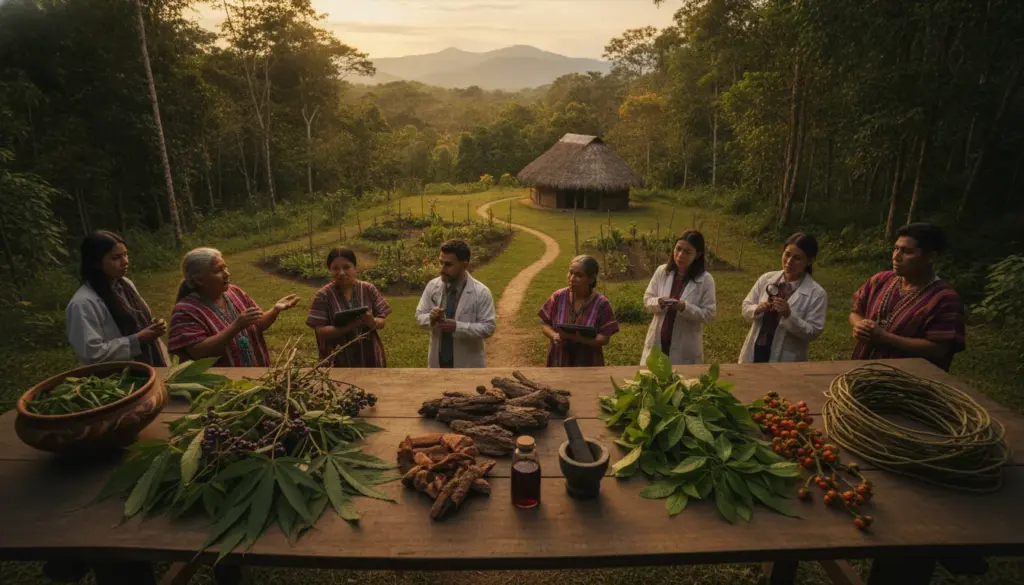
Deep within the Colombian Amazon, the Ceima Cachivera settlement found itself entirely isolated during the COVID-19 pandemic. Stripped of financial resources and conventional medicines, the residents turned back to their ancestral roots. This necessity birthed O’KO PAK’O, translating to the “Mother of Medicine,” a thriving botanical garden that currently cultivates 42 distinct species of therapeutic plants. More than just a living pharmacy, this space functions as an educational hub where elders pass down vital jungle secrets to younger generations, ensuring native knowledge survives.
A standout specimen in this garden is Bûûrö, widely referred to as planta puño (Gloxinia sp.). Traditional knowledge keepers, known as sabedoras, recognize this herb for its potent detoxifying capabilities. It is primarily utilized to treat digestive ulcers, severe stomach pains, and foodborne illnesses. Fascinatingly, administering this botanical remedy requires a highly strict dosing protocol, closely mirroring the precision of modern Western pharmacology. With crucial backing from the SINCHI Institute, the community currently processes these raw leaves into marketable syrups and powders, establishing a truly sustainable business model.
Expert insight: When searching for natural supplements sourced from the Amazon, it is crucial to verify they originate from sustainable, fair-trade agriculture. Only herbs harvested in harmony with their natural growth cycles will yield maximum concentrations of active therapeutic compounds, including essential alkaloids and flavonoids.
Queretaro Oregano: The Fragrance Defending a Semi-Desert
Thriving in the arid landscapes of Querétaro, Mexico, is an intensely aromatic shrub boasting remarkable therapeutic properties: Queretaro oregano (Lippia origanoides). Locally celebrated as “green gold,” the foliage of this resilient bush produces an essential oil heavily concentrated with carvacrol (comprising over 50% of its chemical makeup) and thymol. This unique botanical profile delivers formidable anti-inflammatory, antifungal, and antibacterial benefits.
Beyond its medicinal applications, this fragrant shrub plays an indispensable ecological role. It offers vital shade and nourishment for a variety of insects and avian species, particularly hummingbirds. At the Cadereyta botanical reserve, conservationists have cultivated a dedicated “Hummingbird Sanctuary” where dense clusters of this oregano serve as critical refueling stations for birds migrating all the way from Alaska. This beautifully illustrates how protecting a single botanical species can reinforce an entire web of life, benefiting everyone from tiny pollinators to regional spice cultivators.
Cat’s Claw: An Extraordinary Amazonian Vine
Few botanicals command as much respect in Peruvian herbalism as Cat’s claw (Uncaria tomentosa). This robust liana navigates the dense forest canopy by gripping tree trunks with its distinctive, claw-like thorns. For centuries, indigenous groups like the Shipibo-Conibo and Asháninka have processed the vine’s bark to accelerate wound healing, relieve joint inflammation, and fortify immune function. Modern pharmacological studies have since validated these traditional uses, identifying powerful antioxidant and immunomodulatory mechanisms that sparked a massive global demand.
However, this intense international popularity introduced severe ecological risks. Destructive harvesting practices, which involve completely stripping the bark, inevitably kill the host vine. To combat this, Peru has pioneered innovative initiatives that blend scientific conservation with indigenous harvesting traditions. These programs teach locals how to extract the therapeutic bark without destroying the surrounding forest canopy. Safeguarding this climbing plant is not just about preserving a universal natural remedy; it is a direct front in the battle against Amazonian deforestation. Ultimately, a future without medicinal plants is impossible, as they are intrinsically linked to both human vitality and global climate stability.
Keep this botanical reference guide saved for your future natural wellness research.