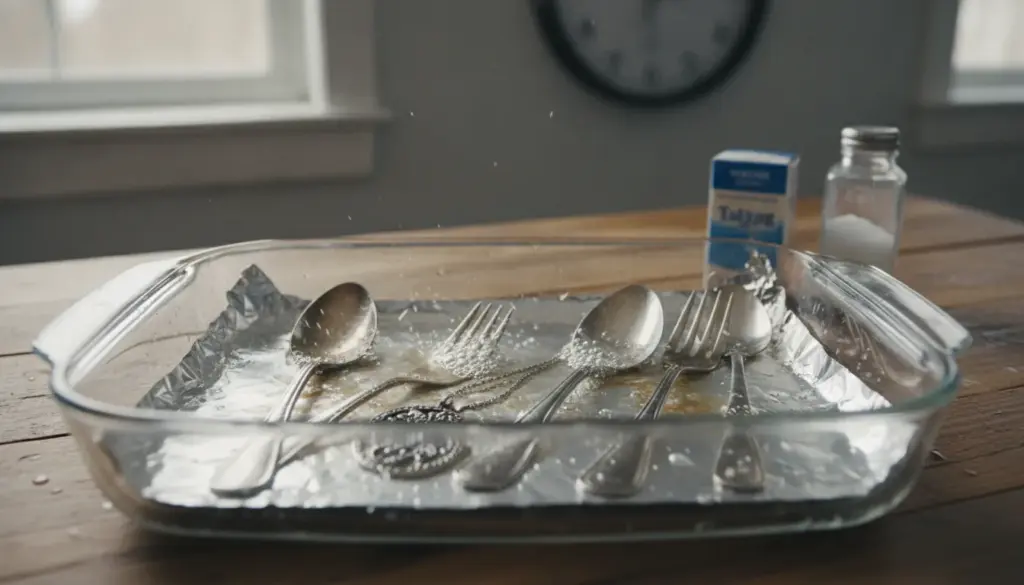
Have your favorite utensils or prized jewelry lost their luster, developing a dark, unsightly coating? You can easily bring back their original, flawless gleam in just five minutes. There is absolutely no need to waste hours on tedious buffing or spend money on harsh, abrasive chemicals. Instead, you can rely on a fascinating scientific principle that takes care of all the hard labor for you. That dark tarnish is not actually grime; it is simply the result of hydrogen sulfide in the air interacting with the metal, and thankfully, it is an entirely reversible phenomenon.
Reversing black tarnish: The zero-rubbing aluminum foil method
Restoring that pristine sparkle relies on one fundamental scientific concept: electron transfer. When tarnished silver comes into contact with a highly reactive metal like aluminum while submerged in an electrolytic bath, the sulfur atoms effectively detach from your valuables and migrate onto the foil. From a metallurgical perspective, this is a brilliant trick. Unlike traditional abrasive buffing, you never strip away any of the precious metal itself. You are simply renewing its surface through pure chemistry.
To trigger this reaction right in your kitchen, start by lining a standard glass or ceramic bowl with common aluminum foil. Make sure the shiny side is facing upward. The pieces you want to restore must maintain direct physical contact with the foil layer. Next, pour in very hot water combined with a generous amount of coarse salt. The elevated heat rapidly accelerates the process, allowing you to watch the dark discoloration magically vanish right before your eyes.
Professional insight: When treating delicate necklaces or intricate filigree pieces, verify that every individual segment touches the aluminum layer. This direct physical connection acts as the bridge that closes the circuit, ensuring the electrochemical reaction treats the entire surface evenly.
Before beginning, gather these basic household essentials:
- Aluminum foil roll to create the necessary base layer in your container.
- Coarse salt, which dissolves to form the vital electrolyte solution.
- Water heated just below the boiling point to activate the elements.
- A soft microfiber cloth to gently polish and dry the items afterward.
Keep in mind that different pieces might require slight adjustments. While full submersion works perfectly for flatware and delicate chains, bulky serving platters may do better with a gentle application of baking soda paste mixed with a tiny drop of water.
Once the tarnish clears, rinsing your valuables under running lukewarm water is absolutely essential. You must wash away any lingering salt residues, as these can cause long-term corrosion over time. Dry everything thoroughly right away, because lingering moisture invites the tarnish to return rapidly. For an extra layer of defense, wiping the pieces down with a specialized precious metal cloth leaves behind an invisible protective barrier.
When to exercise extreme caution
Certain items require a much more delicate touch, as this intensive treatment could cause irreversible damage. Pieces featuring intentional oxidation, often called antiqued silver, should never undergo this process. The reaction will strip away those deliberate dark shadows that give vintage-style jewelry its unique depth and personality.
Furthermore, organic embellishments and porous gems are highly vulnerable to sudden temperature shifts and alkaline environments. Completely avoid submerging any items containing the following elements:
- Natural pearls and coral accents.
- Soft gemstones like turquoise or opal.
- Delicate enamelwork or wooden inlays.
Maintaining proper storage habits is the ultimate secret to minimizing your cleaning sessions. Stashing your valuables inside soft velvet pouches, ideally alongside a small piece of chalk or a silica gel packet, works wonders. These simple additions actively absorb ambient moisture and sulfur gases floating around your home.
Frequently Asked Questions
Can rhodium-plated items go in this bath?
Rhodium-plated items feature a microscopic layer of rhodium designed to prevent tarnishing naturally. Exposing them to baking soda or an aluminum reaction can severely degrade this protective shield. Instead, gently wash these specific accessories using lukewarm water and a mild, pH-neutral soap, taking care not to scrub vigorously.
Why did my silver turn slightly yellow after washing?
A yellowish tint usually indicates that salt was left behind or that your local tap water is exceptionally hard. If you spot a golden hue, simply rewash the item with a gentle cleanser and buff it dry with a clean cotton towel. Occasionally, excessively hot water triggers a temporary color shift, which easily lifts away with a quick, dry hand-polish.