Picture a landscape baking under a merciless 50°C sun, where the earth has hardened so severely that rare raindrops simply slide away. Yet, a groundbreaking initiative in the Al-Bayada region is proving that even severely degraded badlands can transform into a thriving natural habitat. By naturally reviving the earth’s capacity to absorb moisture, experts have managed to cool ground temperatures by a staggering 15 degrees Celsius.
This extraordinary achievement offers a powerful blueprint for environmentalists worldwide. Instead of piping in external water supplies, the strategy focuses entirely on intelligently harnessing local rainfall. Executed in incredibly hostile conditions, this experiment demonstrates that reversing decades of desertification is entirely possible.
Why the Desert Lost Its Natural Water Retention
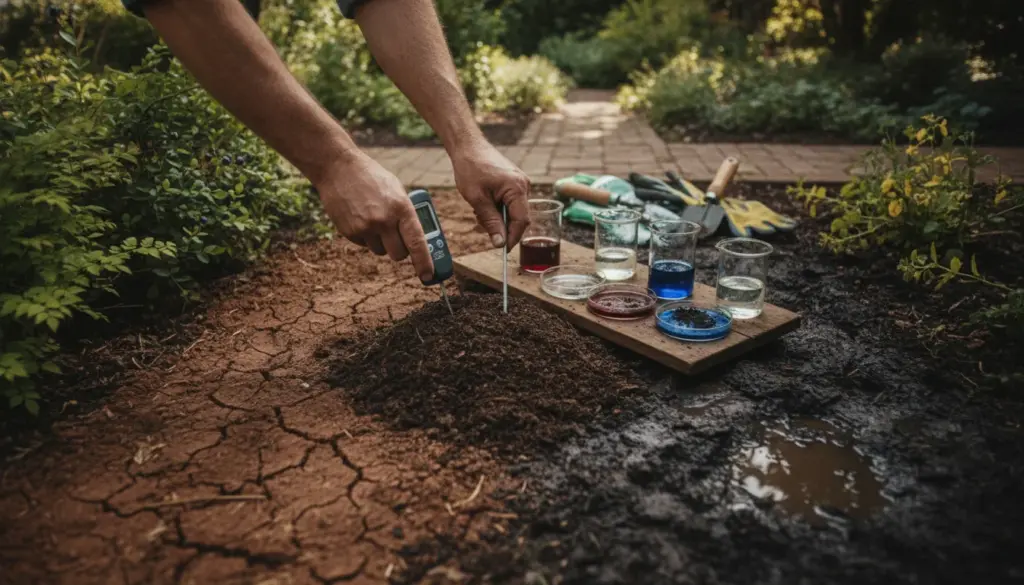
The ecological collapse in Albaida did not happen overnight. Years of unchecked livestock grazing, coupled with the aggressive removal of vegetation for charcoal production, systematically dismantled the soil’s delicate structure. Without deep plant roots to anchor moisture and aerate the earth, the terrain calcified into an impenetrable crust.
When infrequent but intense rainstorms finally arrived, the water could not penetrate the ground. Instead, it triggered devastating flash floods and dangerous mudslides. Within hours, the precious moisture completely vanished—either evaporating into the thin air or washing out to sea—effectively blocking the landscape from naturally healing itself.
Expert Insight: The Power of Water Meandering
If your land suffers from poor moisture retention, carefully evaluate the natural gradient. Rather than digging straight drainage channels, implement water “meandering” techniques. By introducing deliberate physical obstacles that force runoff to slow down, you drastically increase the likelihood of that water percolating into the deeper subterranean layers.
Redirecting Runoff Instead of Pumping New Water
Rather than installing exorbitantly expensive irrigation infrastructure, permaculture specialists chose to work with the existing environmental framework. The team initiated their efforts by meticulously mapping local topography and scrutinizing how storm runoff behaved during sudden floods.
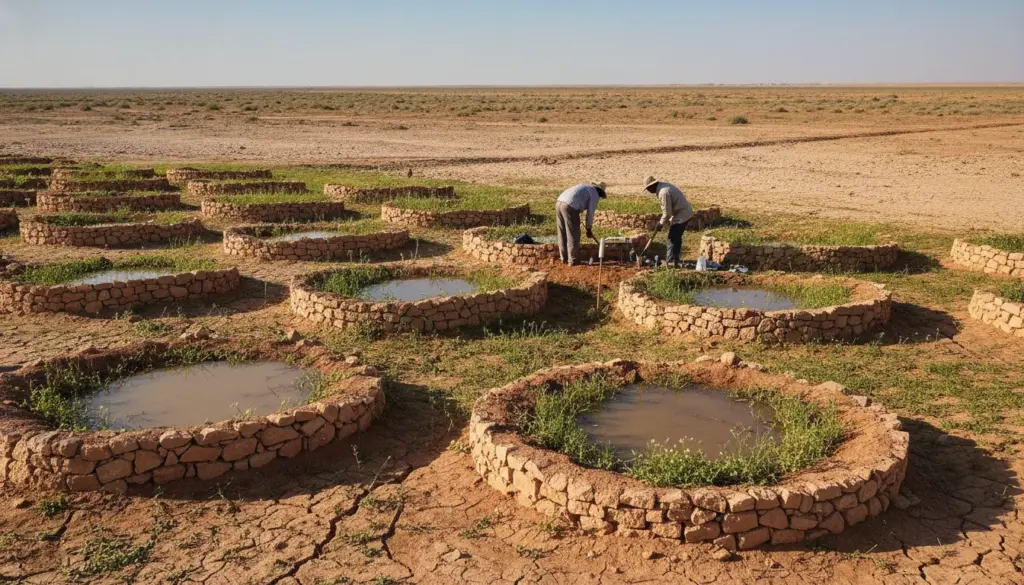
Guided by this data, they constructed strategic stone barriers and agricultural terraces. They also carved out shallow trenches, known as swales, horizontally across the sloping terrain. The overarching objective was incredibly simple: avoid massive dams and instead decelerate the rushing currents just enough for the parched earth to literally drink the standing water.
The First Storms Prove the Concept Works
The ultimate validation arrived with the season’s first heavy downpour. While the storm surge roared down the valleys, it violently crashed into the newly constructed barriers, shattering the current’s destructive momentum. As a result, a massive volume of rainfall successfully penetrated the subsoil rather than stripping away the topsoil.
Naturally, the initial design required some field adjustments. Observing the actual flow dynamics allowed the engineering team to reinforce and reposition specific stone walls. This flexible, nature-adaptive approach ultimately secured the project’s long-term success.
Native Vegetation Cements the Desert’s Comeback
Once the ground retained sufficient moisture, the next phase involved introducing indigenous flora. Botanists specifically selected drought-resistant species renowned for growing exceptionally deep root networks capable of surviving blistering heatwaves.
While these saplings received temporary support from a localized drip system, the ultimate goal was complete self-sufficiency. By 2016, all artificial hydration was permanently disconnected. Only the most resilient trees endured this harsh trial, decisively proving that groundwater reserves had replenished and the biological network could sustain itself independently.
A Shift in Microclimate Brings the Valley to Life
The ensuing results completely shattered scientific expectations. Thanks to the flourishing greenery and locked-in soil moisture, surface temperatures plummeted by a remarkable 15°C, fundamentally altering the entire valley’s microclimate.
Wildlife quickly reclaimed the territory. Insects, lizards, and small mammals returned to the brush, while rare striped hyenas were even spotted prowling the area. What was once a sterile, barren wasteland evolved into a self-regulating ecological engine, continuously generating its own organic matter.
Rethinking Global Drought Management
The dramatic success in Al-Bayada delivers a universally applicable truth: even the most devastated terrains can be restored if we respect natural hydrological cycles. This methodology proves invaluable in regions where seasonal rains are heavily squandered. Simply having access to rainfall is never enough; the true secret lies in preventing that moisture from escaping the watershed too rapidly.
Resilient Crops Boost System Stability
When constructing climate-hardy agricultural frameworks, experts often point to survival-focused plants like cassava. This tough crop thrives in highly acidic dirt and endures prolonged arid spells effortlessly. While a single plant variety cannot singlehandedly green a desert, integrating these hardy species with intelligent runoff management creates highly dependable farming operations, even under punishing climatic constraints.
Valuable Ecological Lessons for Brazil
Parallels to Brazil’s vulnerable Caatinga biome are immediately apparent. While not a true desert, this specific region battles severe deforestation and aggressive topsoil erosion. By implementing earthworks like retention walls and contour-aligned cultivation, farmers could trap precious rainwater on their plots for vastly extended periods. This represents a crucial paradigm shift from aggressively fighting drought to intentionally maximizing every single drop of rain.
Inspiring National Restoration Initiatives
The Albaida triumph has officially sparked a colossal environmental rehabilitation campaign across Saudi Arabia. The nation’s ambitious agenda involves planting millions of saplings and reintroducing native wildlife. These combined efforts aim to drastically curb devastating sandstorms while simultaneously elevating the overall quality of life for local communities.
True Transformation Begins in the Dirt
The most profound takeaway from this entire endeavor is beautifully straightforward. This environmental miracle did not begin with multi-billion-dollar desalination facilities, but rather with basic shovels, scattered rocks, and patient landscape observation.
Restoring natural ground infiltration will always supersede artificial watering schemes. For anyone currently battling severe aridity, this fundamental shift in perspective might just be the ultimate blueprint for thriving on a rapidly changing planet.