
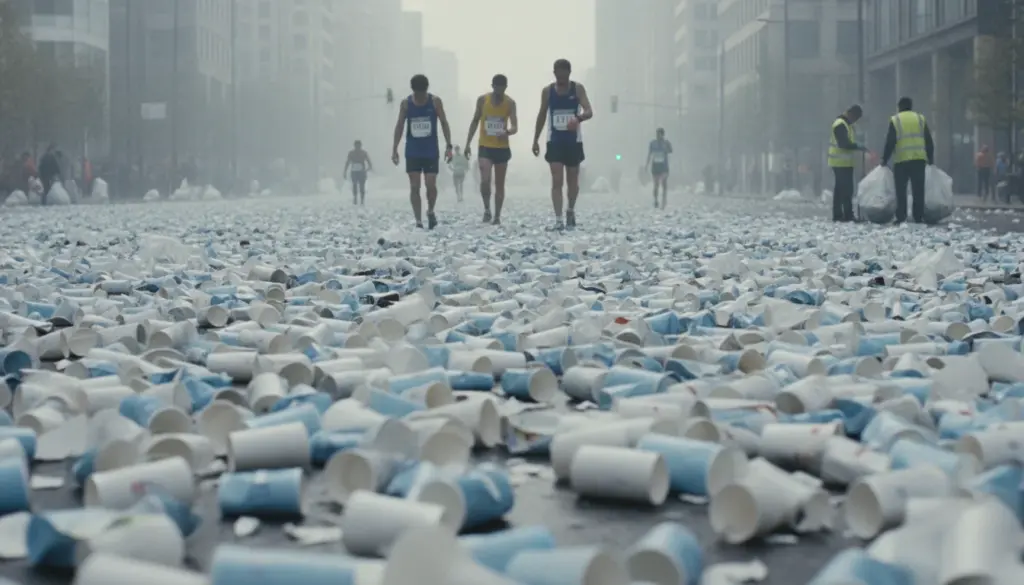
The Messy Reality of Race Day
Picture thousands of athletes sprinting through a city, leaving a trail of unrecyclable, single-use cups in their wake. This isn’t some dystopian fantasy; it is exactly what happens at most major global running events. Every single race produces mountains of trash that will stick around forever, damaging the environment right alongside our celebration of human endurance. That sea of discarded cups scattered across the pavement is truly a sight you can never erase from your memory.
The Paper Cup Eco-Myth
Lots of people assume that grabbing a paper cup at a hydration station is the eco-friendly choice. Unfortunately, that couldn’t be further from the truth. These supposedly sustainable vessels are actually lined with a very thin layer of plastic, which makes recycling them virtually impossible. According to research from Project Drawdown, these discarded items simply pile up in landfills, decomposing over decades and releasing harmful greenhouse gases into our atmosphere.
- Manufacturing these items leaves behind a massive carbon footprint.
- Polyethylene linings turn the concept of recycling into pure fiction.
- Breaking down in the soil takes hundreds of years to complete.
A Reusable Silicone Solution
Fed up with this environmental mess, Kristina Smithe decided to take action by founding Hiccup Earth. The core concept is incredibly straightforward: rather than manufacturing more garbage, race organizers simply rent lightweight, silicone cups. Once runners hydrate, they toss the cups into designated bins so they can be thoroughly sanitized.
Here is the truly impressive part: properly washing 1,500 of these reusable cups requires only 114 liters of water. Believe it or not, that is actually more efficient than a standard cycle in your kitchen dishwasher. Best of all, these flexible vessels maintain their integrity even after being used hundreds of times.
Weighing Costs Against Environmental Benefits
Let’s be completely honest—renting durable silicone gear carries a higher price tag than purchasing bulk, disposable plastic. This is exactly the moment where event coordinators have to decide if their priority is protecting the planet or cutting financial corners.
This innovative model is already thriving across the United States, particularly in cities like Minneapolis and St. Paul, where athletes absolutely love how seamless it feels.
- The gear gets delivered in massive, pre-packed bags.
- Highly visible return containers are placed along the entire race route.
- Collected items are routed straight to a heavy-duty commercial washing facility.
- Fresh, sanitized equipment is prepped for the next race without creating any trash.
The Practical Path Forward for Mass Sports
Climate specialists emphasize a clear reality: isolated efforts won’t fix our environmental crisis, but consistent, scalable habits certainly can. As these silicone alternatives become the industry standard, mass adoption will naturally drive the rental costs down significantly. This is the only real strategy to ensure that massive sporting events stop polluting local neighborhoods and actually champion sustainability.
The numbers speak for themselves. An impressive 902,000 cups have already bypassed the landfill thanks to this exact approach across merely 137 races. So, would you prefer running a marathon where you toss your gear into a reuse bin rather than littering the streets? Let us know your thoughts!