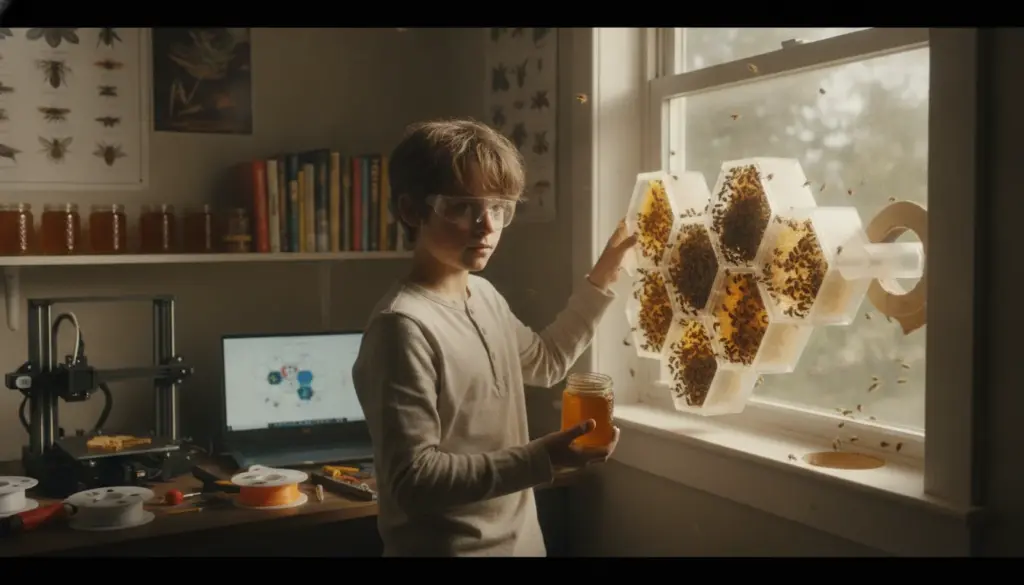
- Features a hexagonal framework modeled in CAD, linking directly to a window so insects can forage freely without invading human space.
- Fully constructed using accessible 3D-printing technology.
- Currently supports a bustling colony of up to 40,000 pollinators.
- Motivated by expensive commercial observation units, but highly improved for structural safety.
- A brilliant showcase of ecological and educational engineering.
A Bedroom Full of Buzzing Potential
Rather than spending his summer vacation glued to a screen, thirteen-year-old Oliver Taylor decided to invite nature right inside. He literally opened his window to a thriving ecosystem by constructing a 3D-printed modular beehive directly attached to his sleeping quarters. From the outside, it looks like a fascinating science fair project, but inside, it represents a brilliant fusion of ecological engineering and sheer curiosity.
This unique setup showcases a clever way to bring biodiversity right into our daily living spaces. Using an interlocking system of hexagonal units, the structure can theoretically expand without limits. Right now, this indoor apiary hosts roughly 30,000 to 40,000 bees, all busy whipping up fresh honey while the teen goes about his day.
Purposeful Design Over Expensive Hobbies
The whole endeavor started when the teenager stumbled upon a commercial indoor observation hive that simply cost too much. Instead of just giving up, Oliver took matters into his own hands and created a functional, highly upgraded version of the pricey original. He quickly spotted a critical flaw in the store-bought design: a single entryway meant a high risk of insects escaping whenever new sections were attached.
To fix this, the young inventor engineered a clever double-door mechanism, taking a page straight from the airtight lock systems used on submarines. The final result is a highly secure, easy-to-dismantle habitat that makes maintenance a breeze. DIY breakthroughs like this highlight how accessible design and critical thinking can serve as powerful weapons against modern environmental hurdles.
Using Accessible Tech to Save Pollinators
To bring his vision to life, Oliver relied on an open-source Prusa machine and free digital modeling platforms like Blender. Because he utilized everyday tech, his brilliant pollinator habitat is completely replicable by other eco-conscious teens or local groups wanting to support essential insect populations. These vital creatures face mounting threats from harsh agricultural chemicals, changing climates, and rapidly shrinking habitats.
Furthermore, his homemade apiary highlights the incredible promise of 3D printing for urban conservation. Cities everywhere are exploring similar concepts, from tiny bug hotels to balcony-friendly pollinator shelters. However, the true magic of this teenager’s project lies in its accessibility. While corporate green tech remains expensive, hands-on initiatives prove that true sustainability can begin right at home.
Inspiring Global Biophilic Architecture
The implications of this DIY engineering marvel stretch far beyond just a clever youth project. We currently live in an era where the rapid decline of pollinators poses a massive threat to our global food supply, and Oliver’s bedroom setup offers a fresh perspective on coexisting with nature. It is not some distant utopian dream, but rather a practical, small-scale solution that actually works.
Naturally, this sparks fascinating conversations about blending micro-habitats into our indoor environments. Could corporate offices, residential flats, or elementary schools eventually house similar organic structures? Imagine pushing biophilic architecture to its absolute limit, integrating live insect colonies directly into building walls.
This concept is not entirely science fiction anymore. Developers in France are already incorporating living facades into fresh construction projects to draw in winged pollinators. Meanwhile, the Netherlands is busy running pilot programs that seamlessly weave solitary bee nests into public bus stops and vibrant green rooftops.