Drowning the root system is the fastest way to send a beloved houseplant straight to the trash bin. Many of us accidentally suffocate our greenery with too much love, reaching for the watering can simply because the top layer of dirt feels dry. However, surface soil loses moisture rapidly, while a hidden pool of water might be sitting at the bottom of the container, slowly turning healthy roots into a foul-smelling mush.
A Wooden Skewer Reveals More Than Expensive Moisture Meters
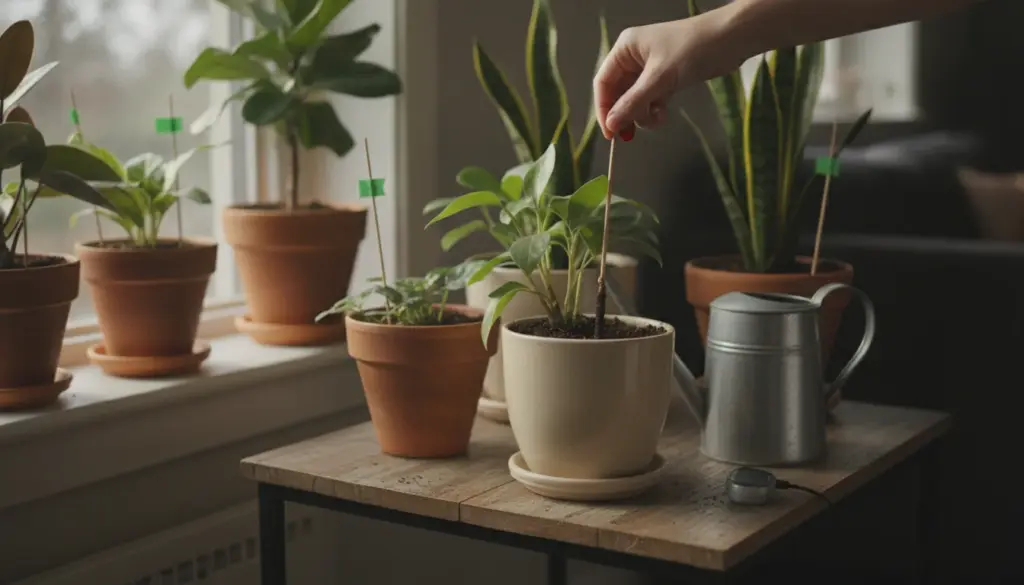
You truly do not need to purchase pricey electronic gadgets from the garden center, especially since natural soil salinity frequently distorts their readings. Wood possesses a remarkable, built-in ability to instantly absorb moisture into its porous fibers, making it a highly dependable material. An ordinary toothpick or a bamboo barbecue skewer functions as an incredibly precise diagnostic scanner.
Relying on this straightforward tool helps you completely avoid devastating root rot. For fussy varieties like delicate ferns or trendy calatheas, sitting in stagnant water is a fatal mistake that the plant will rarely survive.
My Foolproof Step-by-Step Soil Checking Routine
Honestly, this technique is remarkably straightforward, yet countless plant parents completely overlook it. Rather than pouring water blindly and hoping for the best, perform this quick assessment first to gauge the actual conditions under the surface.
- Insert a bare wooden stick deep into the potting mix, ideally toward the center of the container, and let it sit there for at least 10 minutes.
- Pull the skewer out with a swift, firm motion and carefully examine the surface of the wood.
- If the stick feels damp, looks distinctly darker, or has bits of dirt clinging to it, put the watering can down—your plant has plenty of hydration left.
- A completely clean and dry stick is your green light; the soil has exhausted its moisture reserves and desperately needs a drink.
Pro tip: Always repeat this evaluation in several spots if you are dealing with massive planters, as moisture frequently distributes unevenly throughout a large volume of dirt.
Why You Should Always Keep Spare Toothpicks Nearby
These tiny slivers of wood are actually brilliant multitaskers for any indoor jungle. Beyond rescuing your foliage from an untimely watery grave, they handle several other crucial gardening chores. Whenever the potting medium becomes severely hardened and compacted—literally suffocating the root system—a sturdy stick is perfect for gently piercing the earth in multiple locations.
- They act as invisible stakes for fragile, newly sprouted stems that cannot yet hold themselves upright.
- They allow you to safely loosen the crusty top layer of dirt without slicing through delicate surface roots.
- They provide essential soil aeration, boosting oxygen flow and actively hindering the growth of harmful mold.
Maintaining vibrant indoor greenery provides more than just aesthetic appeal; it genuinely boosts your daily mood and purifies the air in your bedroom. Sticking to this elementary wooden stick test ensures you will never wake up to irreparably wilted, mushy leaves again.
How do you figure out when your houseplants are thirsty? Do you rely on specific tricks, or do you just guess the watering schedule? Drop your thoughts and methods in the comments below!