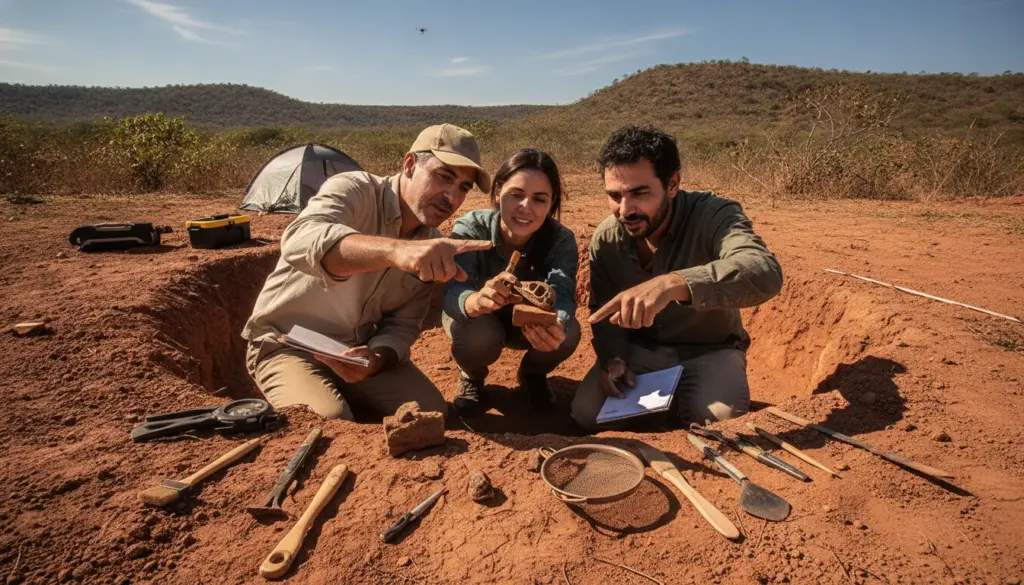
Deep beneath the surface in Brazil, researchers uncovered a biological structure so immense that excavating it required moving 40 tons of soil. This wasn’t just a simple digging project. It was the revelation of an abandoned insect metropolis that completely redefines our understanding of natural architecture. While filming a wildlife documentary, experts stumbled upon this subterranean behemoth, exposing a highly sophisticated network.
A concrete casting operation reveals secrets human architects envy
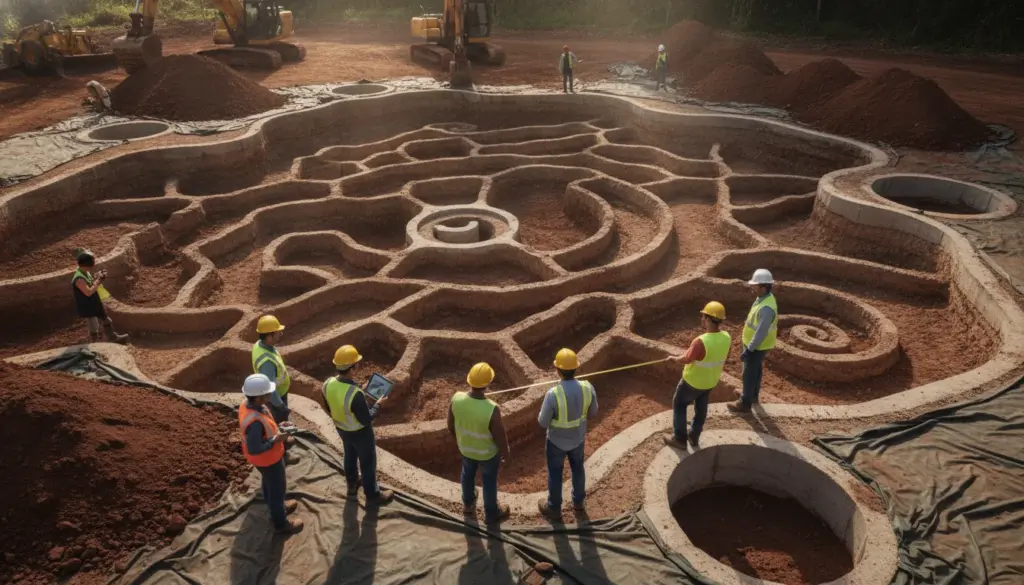
Executing this excavation felt like a massive, precision-driven surgical procedure. The scientific team carefully pumped 10 tons of liquid cement into the labyrinth of empty tunnels. Because the material needed to flow into the most remote crevices of this buried network, the pouring process alone took three full days.
Once the mixture hardened, crews spent weeks painstakingly clearing away dirt to expose the true scale of the habitat. The final results are absolutely staggering. This sprawling ant colony covered an area of 50 square meters and plunged down eight meters deep into the earth.
Far from being a chaotic maze, it featured a meticulously designed layout. The insects engineered robust main highways, intricate side pathways, and specialized chambers to maintain flawless logistics for millions of inhabitants.
Raw survival instinct outperforms architectural blueprints
Fascinatingly, this subterranean empire resulted entirely from collective instinct rather than orders from a single overseer. Building a fortress of this magnitude demanded an astronomical amount of physical labor. To put it in perspective, each worker insect moved soil loads equivalent to a human lugging four times their body weight over a distance of one kilometer—and they did this continuously.
These creatures operate like living bulldozers. Their unique neck joints can withstand incredible pressure, supporting loads up to 5,000 times greater than their own body mass. Without this extraordinary biomechanical adaptation, surviving and building in such an oppressive, heavy environment would be physically impossible.
Why would millions of insects suddenly abandon their mega-fortress?
At first glance, an underground citadel like this seems impenetrable, but nature is exceptionally unforgiving. Entire populations frequently leave their elaborate homes behind when faced with environmental instability or threats that sheer numbers cannot defeat. Flash floods and relentless predators that specifically hunt insect larvae rank high among their deadliest challenges.
Human interference also plays a significant role in sudden evacuations. Even minor construction activity near a nest sends vibrations through the ground, triggering an immediate, mass exodus. For these tiny builders, the fundamental urge to survive always outweighs any attachment to the architectural masterpieces they spent lifetimes constructing.
A silent global invasion dominating coastlines and gardens
While the Brazilian discovery astounds experts with its sheer depth, the absolute size record belongs to an Argentine species. Linepithema humile has established a staggering supercolony stretching an unbelievable 6,000 kilometers along the coastal regions of Italy, France, and Spain. Officially recognized by Guinness World Records, it remains the largest continuous biological structure of its kind ever documented.
The situation gets even more mind-boggling when looking at genetic data. Testing confirms this singular mega-colony has established direct operational branches globally, including:
- California
- Japan
- Australia
By hitching rides in the dark cargo holds of ocean vessels, these prolific travelers have colonized the globe more effectively than any human military force. It took merely a century for them to conquer nearly every continent, brilliantly exploiting global human shipping routes to fuel their expansion.
This massive interconnected network has held its title as the world’s largest continuous colony since January 2002. Have you noticed highly aggressive insect activity in your own backyard recently?