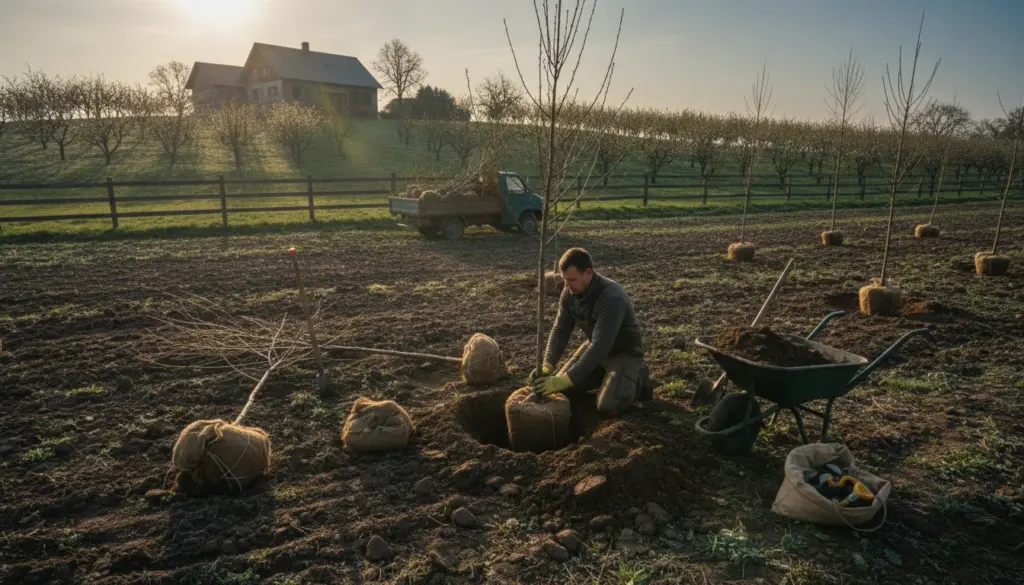
Grab your spade before the plant sap begins to flow properly, as delaying until May is a surefire way to lose your saplings. Many gardening enthusiasts mistakenly assume that the fall season is the absolute only window for expanding an orchard. The reality from a horticultural perspective is quite different: certain tree varieties actually require the chill of March to properly establish root systems before the intense summer heat arrives.
Right now, garden centers and local nurseries are stocking up on bare-root trees. These young plants are highly affordable, easy to transport, and remarkably quick to adapt to their new environment—provided you keep their roots moist prior to planting. There is no secret trick here, just applied biology.
Pears Require a Chilly Start to Survive Summer Heatwaves
Getting your pear trees into the soil during early spring is a brilliant strategy. It allows the plant to develop a robust root network long before the scorching sun begins pulling moisture from the foliage. If you miss this crucial window, your young tree will spend the season merely struggling to stay alive rather than thriving. Reliable varieties like Bartlett or Kieffer are incredibly resilient and will easily adapt to your garden the moment the ground thaws.
Sunlight Fuels Growth, While Frost Destroys Fragile Buds
Always select a planting site that receives a bare minimum of six to eight hours of direct sunlight. It is also vital to steer clear of frost pockets—low-lying areas in your yard where freezing air tends to settle. Since pear trees blossom quite early in the season, a single late-spring freeze in one of these sunken spots can completely wipe out your fruit harvest for the entire year.
Plums Thrive in March Sunshine but Need Companionship
Moving plum trees from the nursery while they are still entirely dormant significantly minimizes transplant shock. This is a critical factor because these specific fruit bearers grow rapidly, often pushing out blossoms before their leaves even appear. Waiting too long to plant means the intense sun will essentially bake the saplings before their root systems have a chance to draw up hydration.
A Solitary Tree Yields an Empty Harvest
Keep a fundamental orchard rule in mind: if you want a bountiful crop, you must plant two distinct varieties in close proximity. Without proper cross-pollination, you will just end up maintaining an attractive green shrub that never produces a single plum. For exceptional flavor, horticulturalists highly recommend the Superior variety. It yields massive, incredibly juicy fruits with a vibrant yellow interior that you simply cannot find in standard grocery stores.
Apple Trees Are Staples, Yet One Flaw Ruins Eco-Friendly Goals
For those gardening in cooler climates, the early spring season is unequivocally the prime time to establish apple trees. They are famously hardy and perfectly align with the natural seasonal growth rhythm. Classic cultivars such as Honeycrisp and Freedom are exceptionally forgiving, making them excellent choices for novice growers learning the ropes.
Compact Spaces Demand Strategy Over Heavy Machinery
When backyard space is at a premium, shift your focus toward dwarf or semi-dwarf varieties.
- They consume merely a fraction of the footprint required by standard trees.
- Your first fruit harvest arrives noticeably faster.
- Routine maintenance like pruning and spraying becomes significantly easier.
While traditional, towering orchard trees carry a certain nostalgic charm, they mostly just create logistical headaches with tall ladders in a modern landscape. Furthermore, a crucial tip for organic gardening enthusiasts: completely avoid the McIntosh variety. It is notoriously susceptible to disease and will quickly rot away without heavy chemical intervention.
Peaches Are Highly Attainable If You Catch the Weather Window
Growing peaches provides incredibly fast gratification, with many trees producing fruit a mere two to four years after entering the soil. Early spring offers the absolute perfect planting condition. Because these trees are self-pollinating, they primarily need a substantial moisture boost to kickstart their development. The rule of thumb is straightforward: get them in the ground the moment the soil is workable.
Consistent Hydration Equals Sweet Results
Never delay peach planting until late spring, as sudden heatwaves act as a death sentence for delicate young saplings. Throughout their inaugural growing season, weekly watering is non-negotiable. Additionally, applying a thick layer of mulch around the base of the trunk is highly advisable. This organic blanket locks moisture into the earth, saving you from hauling heavy watering cans every single humid evening.
Planting Cherries on a Slope Ensures Long-Term Success
While cherry trees are widely celebrated for their stunning spring blossoms, they are ultimately fantastic sources of homegrown nutrition. Getting them established right now, immediately following the final thaw, is an expert move. Cold-hardy cultivars like North Star and Stella will endure harsh winter conditions without skipping a beat.
Proper Drainage Dictates Summer Survival
Whenever possible, position your cherry trees on a gentle slope or slight elevation. These particular root systems despise excess moisture. If they are left sitting in stagnant water from melting spring snow, the roots will inevitably rot away. Abundant sunshine and rapid water runoff are the primary elements these trees demand from their caretakers.
The soil in March holds a natural abundance of moisture, offering young trees a biological advantage that no amount of artificial May watering can replicate.
Have you already selected your preferred fruit varieties for the upcoming growing season, or are you holding out until the very last minute? Share your orchard plans in the comments below!