Waking Up a Dormant Plant
A stubborn houseplant that refuses to produce flowers is far from a lost cause. By making a few intentional adjustments to its hydration, nutrition, and lighting, you can easily coax it back into a stunning floral display. There is even a clever lighting technique that many indoor gardeners use to encourage nearly continuous blossoms.
Why Your Plant Suddenly Stops Producing Flowers
While these tropical beauties have a reputation for being finicky, they are actually just highly responsive to their immediate environment. In their natural habitat, many varieties live as epiphytes, clinging high up in the branches of jungle trees.
Up in the canopy, they experience very specific conditions:
- Abundant airflow circulating directly around the root system
- Frequent moisture that drains away instantly without puddling
- Highly diluted, sparse nutrients delivered naturally by rainfall
- Dappled, indirect sunlight filtered through the dense foliage above
Contrast this with the typical living room setup. We often trap them in soggy potting soil, overfeed them with synthetic fertilizers, and place them directly above baking radiators. The foliage might survive and stay green, but new floral stems will refuse to emerge. Treat your plant more like a rainforest climber rather than a traditional potted flower, and you will see incredible results.
Less is More: Dilute Nutrients for Better Blooms
One of the most frequent blunders indoor gardeners make is being far too generous with plant food. Commercial greenhouses cultivate these species under flawlessly controlled conditions with dialed-in nutritional formulas. At home, people often pour in a heavy splash of generic liquid fertilizer just to be safe, which usually backfires.
The Hidden Danger to the Roots
These plants typically grow in highly porous substrates made of bark chips or coconut coir. Applying overly strong or excessively frequent fertilizer causes heavy salts to accumulate in this chunky mix. These lingering salts act exactly like a dry sponge, aggressively pulling vital moisture right out of the root cells.
While the leaves may still look relatively healthy, the underlying structure slowly weakens. When energy drops, flower production is the very first biological process the plant abandons.
Horticultural guidelines highly recommend adopting a much milder feeding routine:
- Use specialized formulas: Stick to dedicated orchid food or heavily water down your standard houseplant fertilizer.
- Feed seasonally: Only apply nutrients during the active spring and summer growing phases.
- Schedule a flush: Periodically introduce a “rest week” where you flush the pot with pure water to wash away lingering salts.
This conservative approach keeps the bark mixture airy, prevents chemical burns, and leaves the plant with plenty of surplus energy to push out new buds.
The Household Secret: A Gentle Milk Boost
Plant enthusiast communities frequently share a unique pantry hack for gentle nourishment. Dairy milk contains trace amounts of calcium, beneficial proteins, and natural sugars that can act as a very mild, organic booster when diluted properly.
If you want to experiment with this natural trick, strictly follow these safety rules:
- Dilute heavily: Mix a strict ratio of one part milk to ten parts fresh water.
- Limit frequency: Never apply this dairy mixture more than once a month.
- Ensure drainage: Do not let any milky liquid stagnate in the bottom of the pot, as this quickly leads to mold and foul odors.
Dedicated collectors note that pairing a sparse traditional fertilizing schedule with an occasional, gentle dairy watering helps maintain long-term vitality. It isn’t a magical cure-all, but rather an excellent supplementary support system.
The Immersion Method: Ditch the Watering Can
Proper hydration habits are just as crucial as feeding. In most households, owners simply dump a quick splash of water over the top of the pot once a week. This method is convenient but highly ineffective, as the surface gets completely soaked while the inner core remains bone dry.
A Quick Soak for Maximum Vitality
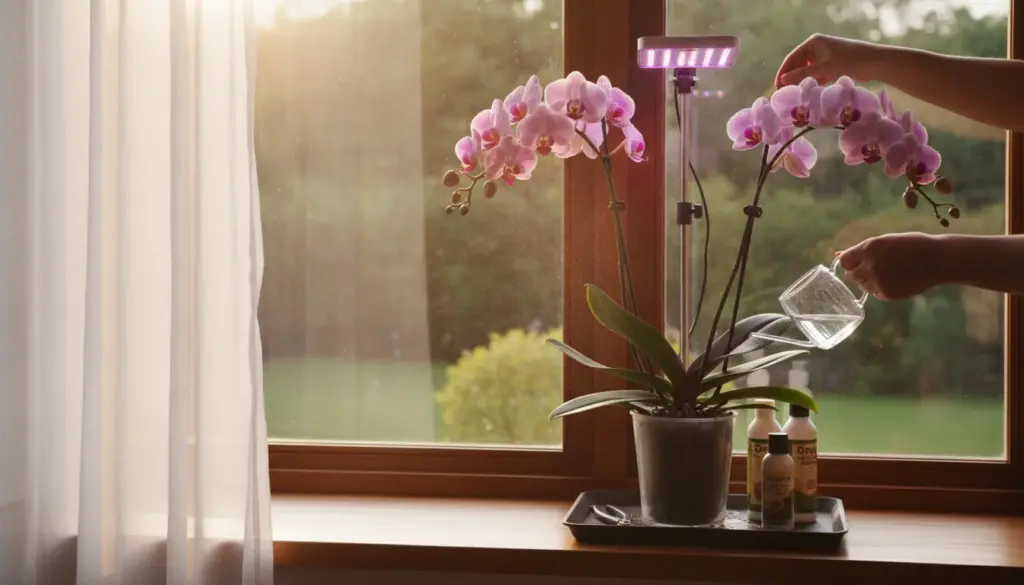
A highly successful technique widely praised in botanical circles involves giving the entire pot a brief, plunging bath. Submerging the container allows the root system to absorb the exact amount of moisture it requires, without sitting in a perpetual swamp afterward.
When you consistently use this soaking method, the plant usually responds within a few weeks. You will start noticing plumper, vibrant green root tissue, which eventually paves the way for fresh floral spikes.
Replicate the Jungle with Weekly Misting
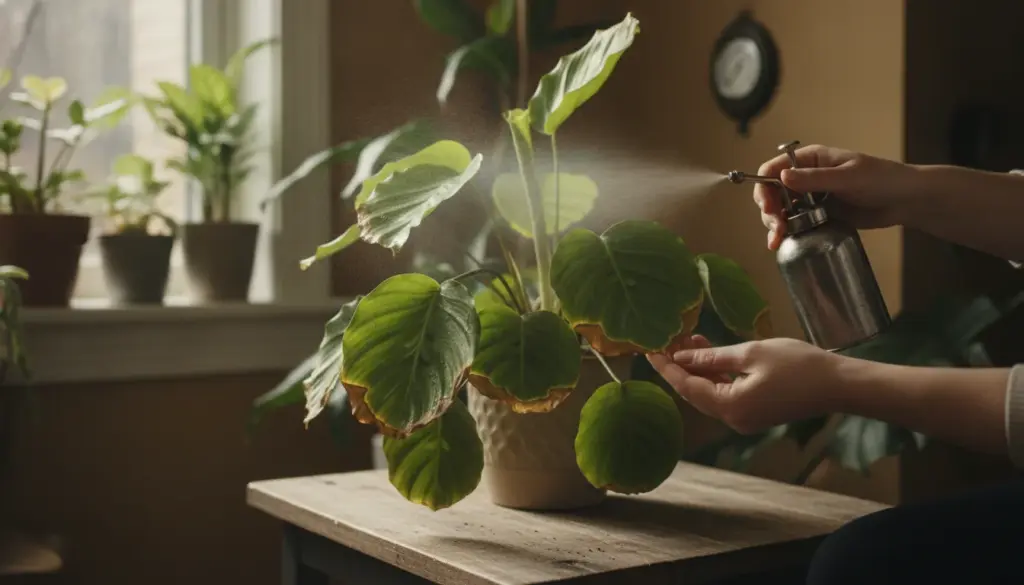
To further stimulate growth, try lightly spraying a heavily diluted fertilizer solution directly onto the foliage, stems, and exposed aerial roots once a week. This perfectly replicates the nutrient-rich, humid mist these species absorb in the wild.
This fine, nourishing spray provides an immediate boost without risking heavy puddles in the substrate. However, you must be incredibly careful to keep moisture out of the plant’s crown. Any stagnant water trapped in the tight center joint between the leaves will inevitably cause fatal rot.
The “Dark Weeks” Strategy to Force Budding
Occasionally, despite flawless watering and careful feeding, your plant will stubbornly remain vegetative and green. When this happens, experienced growers rely on a lesser-known environmental stressor: temporarily restricting their light exposure.
Mimicking a Natural Dormancy
Many tropical regions go through distinct seasons featuring shorter days or heavy cloud cover. During these darker phases, wild epiphytes slow their growth significantly. Once the weather improves and light returns, the sudden shift triggers a massive blooming response.
You can easily recreate this biological rhythm in your own home:
- Relocate your container to a distinctly cooler, heavily shaded room for about two to three weeks.
- Alternatively, drape an opaque paper bag loosely over the foliage, making sure to remove it briefly during the day for fresh air.
Keep the ambient temperature stable during this timeframe and reduce your watering frequency. This environmental shift sends a clear biological signal that it is time to rest, perfectly setting the stage for the upcoming reproductive phase.
After this forced dormancy, a fresh spike will often emerge from a sleeping node on an old stem, or shoot up directly from the base. Be patient, as these fascinating organisms operate on a very slow, methodical timeline.
Classic Blunders That Halt Floral Growth
If your goal is continuous, year-round color, you absolutely must avoid these common indoor gardening traps:
- Insufficient lighting: Keeping them in dark corners results in gorgeous green leaves but zero blossoms. A bright windowsill protected from harsh, direct afternoon sun is ideal.
- Decomposed potting media: Over time, bark chips break down into dense soil, suffocating the roots and trapping excess moisture. Refreshing the chunky substrate every two to three years is non-negotiable.
- Excessive proximity to heat: Placing containers directly over active radiators rapidly dehydrates the sensitive buds and delicate root tips.
- Overwatering during dormancy: Immediately after the final petals drop, the plant enters a resting phase and requires significantly less moisture.
Once you master these basic environmental controls, a seemingly difficult houseplant becomes incredibly predictable. You will start recognizing its natural cycle: vegetative leaf expansion, followed by bud formation, a spectacular floral show, and finally, a brief period of well-deserved rest.
Pro Tips for Endless Living Room Color
While not every single variety is capable of blooming every month of the year, popular household species like the Phalaenopsis can achieve an almost perpetual flowering loop. Smart collectors often maintain a small rotation of plants at different biological stages. As one finishes its display and enters dormancy, another is just waking up, guaranteeing permanent color in the home.
If you want to dive deeper into the hobby, research your specific variety’s temperature preferences. Some types absolutely require chilly nighttime temperatures to initiate bud development, while others demand constant, unwavering heat. A drafty window frame that cools down slightly after sunset can actually be a massive advantage for triggering stubborn bloomers.
Ultimately, success boils down to observing natural rhythms rather than relying on expensive chemical miracles. By feeding conservatively, mastering the immersion bath, and occasionally playing with light exposure, you can transform a stagnant houseplant into a reliable, blooming centerpiece.